Monday, July 21, 2025

Babbba - Cabaret Conversation (Vol 2)

Styles: Jazz Fusion
Year: 2024
Time: 50:47
File: MP3 @ 320K/s
Size: 120,5 MB
Art: Front

(3:22) 1. Heart's Confess
(3:14) 2. I Found My Place
(2:26) 3. J Manouche
(3:57) 4. Jazzy Arpy Waves
(2:24) 5. Jazzy Trip
(3:30) 6. Kitty
(2:15) 7. Late Night Rendezvous
(2:57) 8. Late Night
(2:42) 9. Little Bit Confused
(3:15) 10. Local Surprise
(3:01) 11. Lost In The Shuffle
(2:09) 12. Magical Dance
(3:58) 13. Masquarade
(2:35) 14. Melting The Night
(3:31) 15. Midnight Stroll
(2:58) 16. Mistery, a piece of History
(2:26) 17. Moonlit Funky

Experience the smooth jazz vocal stylings of Babbba in Cabaret Canvas Part 2. Get ready for a syncopated groove that will leave you wanting more!

Cabaret Conversation (Vol 2)

Myra Melford's Be Bread - The Whole Tree Gone

Styles: Piano Jazz
Year: 2010
Time: 65:25
File: MP3 @ 320K/s
Size: 149,8 MB
Art: Front

( 6:27) 1. Through The Same Gate
(11:01) 2. Moon Bird
( 8:41) 3. Night
( 8:39) 4. The Whole Tree Gone
( 8:34) 5. A Generation Comes And Another
( 6:13) 6. I See A Horizon
( 7:28) 7. On The Lip Of Insanity
( 8:20) 8. Knocking From The Inside

It's been too long since pianist Myra Melford's last release as bandleader, especially as we can now hear what we've been missing. For the second outing by her Be Bread ensemble, the pianist has assembled an all star cast of frequent collaborators. Bassist Stomu Takeishi, guitarist Brandon Ross and trumpeter Cuong Vu are holdovers from the debut disc, here joined by clarinetist Ben Goldberg and Matt Wilson at the traps. Melford herself concentrates solely on piano. Electronics are set aside for an all-acoustic palette, resulting in a high level of cohesiveness across the 65-minute program.

Most of the eight original pieces were written as part of a suite in the fall of 2004, with support of a Chamber Music America grant. All have been performed many times over the last five years in a variety of settings. Such familiarity makes for a committed and potent ensemble performance of music which satisfies both the head and the heart with its switchback arrangements, well integrated solo space and emotionally ambiguous themes. Melford's rhythmic acumen and barreling blues inflections together with Wilson's crisply propulsive drive and resourceful percussive textures banish any thought of the salon: this is chamber music with attitude.

Melford is well served by her band. Goldberg's poised mellifluous clarinet and Vu's casually expressive trumpet make for an engaging pairing, combining well in unison, but shining apart, with Goldberg's popping percolating contra-alto clarinet introduction to "Knocking from the Inside" and Vu's spluttering breathy excursion on "Moon Bird" which is especially noteworthy. Not to be outdone, the leader contributes a dazzling opening cadenza to the same track, almost Taylor-esque in its fragmentation and percussive attack. Ross' spiky picking, particularly on soprano guitar, adds a voice incisive in phrasing but unconventional in timbre, meshing attractively with Takeishi's pliant acoustic bass guitar for a kinetic rhythmic latticework.

Whether breaking out of the soaring klezmer waltz of "Through the Same Gate" with an unfettered piano solo, navigating the knotty staccato title track only to frame duets for first bass and guitar, then rippling piano and clarinet or pressing the get-up-an- go urgency of "I See a Horizon" into a swirling ensemble mash up, Melford's taut arrangements blur the distinction between front line and support, group and solo. Each richly voiced cut is different in construction and mood, drawing on a wide range of world music influences, yet the outcome remains distinctive and unclassifiable. The Whole Tree Gone is yet another outstanding release from Firehouse 12, and a triumph for Melford.
By John Sharpe https://www.allaboutjazz.com/the-whole-tree-gone-myra-melford-firehouse-12-records-review-by-john-sharpe

Personnel: Myra Melford: piano; Cuong Vu: trumpet; Ben Goldberg: clarinet and contra-alto clarinet; Brandon Ross: guitar and soprano guitar; Stomu Takeishi: acoustic bass guitar; Matt Wilson: drums.

The Whole Tree Gone

Gary Bartz - Music Is My Sanctuary

Styles: Jazz Funk
Year: 1977
File: MP3@320K/s
Time: 36:02
Size: 83,5 MB
Art: Front

(6:22) 1. Music Is My Sanctuary
(5:57) 2. Carnaval De L'Esprit
(4:11) 3. Love Ballad
(6:53) 4. Swing Thing
(5:55) 5. Oo Baby Baby
(6:42) 6. Macaroni

Surrounding himself with a world-class ensemble of disco-jazz-fusion musicians and armed with the Mizell brothers at the production console (who were near the peak of their careers around this time), Gary Bartz took the route of Donald Byrd and brought new elements of funk, soul, and a foreshadowing of the soon-to-be-commercial disco craze all into a 40-minute workout on Music Is My Sanctuary. While purists shook their heads in disapproval and disdain at Bartz's new direction (one emulated by several jazz pioneers at the time), those who could take off their traditional jazz mufflers would find Bartz and the Mizells making some highly infectious, soulful music. Further accentuated by the addition of Syreeta Wright on vocals, the Mizells took Bartz into nearly uncharted territories for jazz musicians. The results of this experimentation more than paid off, with the dividends being Bartz's most polished, focused releases.~ Rob Theakston https://www.allmusic.com/album/music-is-my-sanctuary-mw0000027322

Personnel: Gary Bartz - Saxophone (Alto, Soprano), Piano, Electric Piano, Synthesizer, Vocals; Larry Mizell - Keyboards, Vocals; George Cables - Piano; David T. Walker, John Rowin, Juewett Bostick, Wah-Wah Watson - Guitar; Curtis Robinson, Jr., Welton Gite - Bass; Howard King, James Gadson, Nate Neblett - Drums; Bill Summers, James Mtume - Percussion; Eddie Henderson, Ray Brown - Trumpet; Sigidi, Syreeta Wright - Vocals

Music Is My Sanctuary

Friday, July 18, 2025

Nicki Parrott - Dear Blossom

Styles: Vocal Jazz,Swing
Year: 2017
Time: 58:02
File: MP3 @ 320K/s
Size: 135,2 MB
Art: Front

(4:36) 1. I Wish You Love
(3:30) 2. Everything I've Got Belongs To You
(3:52) 3. I Walk A Little Faster
(4:21) 4. Peel Me A Grape
(4:13) 5. Inside A Silent Tear
(4:14) 6. Devil And The Depp Blue Sea
(4:36) 7. Dear Blossom
(2:52) 8. I'm Hip
(4:08) 9. Tout Doucement
(4:26) 10. Try Your Wings
(4:18) 11. Surrey With A Fringe On Top
(3:47) 12. Rhode Island Is Famous For You
(3:46) 13. It Amazes Me
(5:16) 14. It Might As Well Be Spring

Few, if any, contemporary jazz singers can match the recording prolificacy of Nicki Parrott: close to 30 albums (many for Japan’s Venus label) in less than 15 years, including tributes to mentor Les Paul, Doris Day, Peggy Lee, Nat King Cole, the Carpenters and, just released overseas, Burt Bacharach. Here the indefatigable Australian salutes Blossom Dearie, a task more difficult than it may seem.

Anyone who’s heard even a single Dearie track knows the unforgettable voice: that sweet, childlike mew. But underlying that seemingly innocent purr, and essential to the definition of her genius, was a slyness that could reveal itself as playful, coy, smirking or sardonic.

Parrott, also a skilled bassist, has a fuller, richer and more sanguine sound than Dearie, but she ably echoes her fetchingly girlish side. That’s all that’s needed for such winsome selections as “I Wish You Love” and “Inside a Silent Tear,” and dreamier fare like “It Amazes Me” and “I Walk a Little Faster.” Others, though consistently charming (particularly “Peel Me a Grape,” Parrott alone with cornetist Warren Vaché), fall short- missing that vital substrata.

“Rhode Island Is Famous for You,” for example, bounces brightly but without the flippantly comic edge. Ditto the absent cynicism on “Everything I’ve Got Belongs to You.” And, modernizing the lyrics to “I’m Hip,” Parrott undermines the Dave Frishberg/Bob Dorough tune’s intent: to reveal how intrinsically un-hip the narrator is Parrott includes one original, the paean “Dear Blossom” winningly tender, yet again failing to capture Dearie’s full essence.https://jazztimes.com/reviews/albums/nicki-parrott-dear-blossom/

Dear Blossom

Thursday, July 17, 2025

Max Roach - The Max Roach Trio, Featuring The Legendary Hasaan Ibn Ali

Styles: Hard Bop
Year: 1964
File: MP3@320K/s
Time: 40:45
Size: 94,3 MB
Art: Front

(5:40) 1. Three-Four vs. Six-Eight Four-Four Ways
(5:13) 2. Off My Back Jack
(3:52) 3. Hope so Elmo
(6:39) 4. Almost Like Me
(6:09) 5. Din-Ka Street
(8:08) 6. Pay Not Play Not
(5:00) 7. To Inscribe

Hardly any other musician has released so little as Hasaan Ibn Ali, born William Henry Langford Jr., in 1931, who died in 1980. Just seven titles in all are his complete output, all of which he composed himself, all of them on the present Atlantic LP, and all recorded in December 1964. The saxophonist Odean Pope, who often practised with him, talks of a second recording session in 1965 for Atlantic, but the recordings were never released because Hasaan was sent to jail shortly afterwards; rumour has it that the tapes were destroyed in a fire and it might well be that recordings with John Coltrane still exist somewhere or other.

Until then, one should enjoy the Max Roach Trio with Art Davis on the bass to the full. We have here a recording that will astound and fascinate your ears with its originality. A first impression conjures up reminiscences of Cecil Taylor and Herbie Nichols, while Hasaan himself talks of the pianist Elmo Hope as the man who brought him closer to the ‘mystery of music’. When asked how the recording session with maestro Max Roach went, Hasaan said: »They scared me to death.«

According to Odean Pope, Hasaan was not an easy person to get on with, and he was convinced of his talent to the point of arrogance. But despite this or perhaps because of this one listens spellbound to the 40 minutes on this LP, a legacy and never-fulfilled promise of an extremely talented man. We are indebted to Max Roach, who persuaded the bosses of Atlantic Records to make these recordings. For many, many years they had vanished from the record market, but fortunately they are now available as an audiophile re-release to be listened to and admired. https://lightintheattic.net/releases/5903-the-max-roach-trio-featuring-the-legendary-hasaan

Personnel: Max Roach - drums; Hasaan Ibn Ali - piano; Art Davis - bass

The Max Roach Trio, Featuring The Legendary Hasaan Ibn Ali

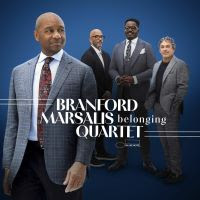
Branford Marsalis Quartet - Belonging

Styles: Saxophone Jazz
Year: 2025
Time: 62:53
File: MP3 @ 320K/s
Size: 144,4 MB
Art: Front

( 8:21) 1. Spiral Dance
(11:01) 2. Blossom
( 8:55) 3. ‘Long As You Know You’re Living Yours
( 7:35) 4. Belonging
(12:40) 5. The Windup
(14:19) 6. Solstice

It appears to be that time of year when all musicians with ties to New Orleans unveil their latest albums. This time, we are graced with a release from one of the most illustrious members of the Marsalis family. This remarkably elegant album represents Branford Marsalis and his quartet’s vision of Belonging, the seminal record Keith Jarrett recorded in 1974. This highly sophisticated reinterpretation borders on an outright rewriting of the original, with the crème de la crème of jazz musicians joining Branford Marsalis: pianist Joey Calderazzo, bassist Eric Revis, and drummer Justin Faulkner.

Belonging, as envisioned by Branford Marsalis, delves even deeper into the complexities of the original recordings. Joey Calderazzo, rather than merely echoing Jarrett’s style, offers us sublime moments; at times so breathtaking that one can hardly believe how profoundly he has elevated Jarrett’s music. Long captivated by Branford Marsalis’s saxophone artistry, I find that here, he delivers truly astonishing performances, seamlessly inhabiting Jarrett’s musical spirit with remarkable success. Marsalis himself admits that when Belonging was first released in 1974, his musical interests lay elsewhere. “I was a high school freshman, listening to R&B,” he recalls. “I didn’t even know Belonging existed.” That changed when he turned to jazz, though initially, he was familiar only with Jarrett’s solo piano work; until pianist Kenny Kirkland introduced him to Jarrett’s European Quartet, featuring saxophonist Jan Garbarek, bassist Palle Danielsson, and drummer Jon Christensen. “We were on a plane sometime in the ’80s, and Kenny put his headphones over my ears to make me listen to [Jarrett’s 1979 album] My Song. When he tried to take them back after five minutes, I grabbed his hand. As soon as we landed in the next city, I went out and bought every album that group had recorded.”

Such moments of revelation are common among great musicians; knowing how to listen is just as crucial as knowing how to learn. It is through this deep listening that an artist can ultimately refine their craft to the exquisite level displayed by each member of this quartet. A similar epiphany occurred when Marsalis decided to include The Windup from Belonging on his previous album, The Secret Between the Shadow and the Soul (2019). “We were all listening to The Windup while working on that album, and Revis suggested we go a step further and record Belonging in its entirety. The album is phenomenal, and we knew we could bring something unique to it. We all loved the idea, but then the pandemic hit. Once it was over, our enthusiasm for the project remained just as strong.”

The pandemic; a time of reflection and creativity for many artists; became the fertile ground from which this vision fully emerged. For musicians like Branford Marsalis, it allowed for a deep, unrestrained exploration of the project. The quartet approached Belonging with the same philosophy Marsalis has applied to classics by Charles Mingus, the Modern Jazz Quartet, John Coltrane, and others: neither a strict imitation of the originals nor an extreme deconstruction. “On the track Belonging, I do borrow certain phrases from Jan Garbarek,” Marsalis acknowledges. “I didn’t hold back when it felt natural, but we never intended this as a rigid homage. I always listen to an album as a whole, not just the saxophone solos, and what impresses me most about Belonging is how seamlessly everything interlocks.”

For Marsalis, the passage of time has proven to be an invaluable asset: “The greatest advantage we have is fifty years of additional musical history and the ability to channel that collective experience.”

I often find myself immersed in extraordinary albums, but I must confess a particular fondness for this one. The sheer intelligence of its conception, coupled with its stunning execution, makes it far more than just a convincing tribute. It is nothing short of essential; an album destined to rise to the top of our Indispensable collection.By Thierry De Clemensat
https://www.paris-move.com/reviews/branford-marsalis-quartet-belonging/

Belonging

Thursday, July 10, 2025

Teresa Luján - Sings Anita O'Day

Styles: Vocal Jazz
Year: 2021
Time: 46:09
File: MP3 @ 320K/s
Size: 106,9 MB
Art: Front

(2:52) 1. Fine and Dandy
(4:16) 2. Honeysuckle Rose
(5:45) 3. A Nightingale Sang in Berkeley Square
(3:15) 4. Sing, Sing, Sing
(2:46) 5. Pick Yourself Up
(5:36) 6. Somebody's Crying
(3:43) 7. Let's Face the Music and Dance
(3:19) 8. Four Brothers
(2:26) 9. Drum Boogie
(4:04) 10. Tenderly
(3:27) 11. Whisper Not
(4:34) 12. Tea for Two

"I saw Anita O'Day live in 1987, at Teatro Principal in Valencia. Her and clarinetist Buddy DeFranco were the guest artists in tour with Woody Herman’s Orchestra, which was then led by Frank Tiberi. I barely knewher then; she looked like a nice old grandma, but I wasn’t impressed. Almost 70 then, her best days were behind her. I discovered her little by little, thanks to the wonderful albums that I slowly managed to get my hands on, and to films like Jazz on a Summer’s Day (1960), where a hat with feathers, a pair of white gloves and a black cocktail dress became the iconic get-up that today we associated with her.

In any case, for those of us without ties to her and her times, her independent character, her defiance of apartheid, her addiction problems and her flashes of genius on stage feel very far away. For us, Anita O'Day means mainly a vocal style. A style that share with Billie Holiday the limitations of their tone and timbre —as well as the creative solutions to overcome them—, with Ella Fitzgerald the passion of rhythm, and with Mel Tormé the overwhelming imagination necessary to recreate well-known songs and turn theminto one surprise after another.

Teresa Luján is also an independent soul among us. A singer who spends her time teaching and investigating —she is one of the foremost experts in Tete Montoliu when she decides to face an audience, it is always after careful consideration of the project. She is not particularly keen on experimenting, butwhen she looks back in search of inspiration, there isn’t a hint of nostalgia in her eye. Her interest in Henry Mancini or the Boswell sisters is focused on the more timeless aspects of their work. Now, with her tribute to Anita O'Day she wants to highlight just how modern she was.

This CD also represents a step forward in Teresa Lujan’s career as a singer. For the first time she is confronting an artistwith a similar stylistic frame, range and color to her own. Although Teresa’s voice has a deeper timbre and a more pronounced vibrato, she manages to sidestep the main danger in this endeavor, which was imitation. And she does so using her strongest suit, which she also shares with her admired O’Day: the more jazz-oriented aspects of her craft. And being backed by a trio —and an excellent trio at that,withMiano, Ferrer and Pérez, experts inmaking the music walk— a fresh, swinging approach is guaranteed. When all is said and done, a feeling of freedom pervades their music, and the end result belongs to all of them, not taxes, no tolls, no buts.

The choice of songs hearkens back to Anita O'Day, but with subtle innovations with respect to her better-known versions. The first three tracks were already on the LP 'Anita' (1956), with orchestrations by Buddy Bregman and some tunes for small group. Teresa Luján’s «Fine and Dandy» still uses the original arrangement, but focusing more on the pure vocal sensuality of the first bars, to later go into a beautiful scat that remindsme of Chet Baker. From the initial walkin’ bass, «Honeysuckle Rose» also sounds like the 1956 arrangement, but Teresa adds a vocal solo, followed by two more by Richi Ferrer and Fabio Miano. «A Nightingale Sang in Berkeley Square» is the first ballad,which lets Teresa showmore of her personality, her range of colors and phrasing, as she let’s herself be dragged by the beautiful melody, never straying too far from the intimacy that O'Day imparted to her own version. (tbc: https://www.freshsoundrecords.com/teresa-lujan-albums/53998-sings-anita-o-day.html)

Personnel: Teresa Luján (vocals), Fabio Miano (piano), Richi Ferrer (bass), Julio Pérez (drums). Recorded at Infinity Estudios, Madrid, June & September 2019

Teresa Luján Sings Anita O'Day

Jeb Patton - Whisper Not

Styles: Avantgarde jazz, Contemporary jazz, Free jazz
Year: 2025
Time: 38:38
File: MP3 @ 320K/s
Size: 89,0 MB
Art: Front

(7:34) 1. Cheesecake
(5:49) 2. Whisper Not
(5:29) 3. Take the Coltrane
(7:36) 4. Darn That Dream
(4:50) 5. My Heart Stood Still
(7:16) 6. Solar

Jeb Patton has earned a distinguished reputation in the international jazz community. Gifted with exquisite technique, commanding swing, and a profoundmelodic commitment, he has made a lasting impact on the contemporary jazz scene.

Under the mentorship of Sir Roland Hanna and Jimmy Heath, Jeb earned his Master of Arts degree, summa cum laude, in 1997 from the Aaron Copland School of Music, Queens College, City University of New York. During his studies, he was also honored with the Louis Armstrong Award for Composition by the ASCAP Foundation.

Since graduating, Jeb has toured extensively across the United States and abroad with the Heath Brothers and Jimmy Heath’s Generations Quintet, performing in theaters, festivals, concert halls, colleges, and jazz clubs. Since moving to New York in 1996, Jeb has collaborated with esteemed musicians such as Charles McPherson, The Jimmy Heath Big Band, The Dizzy Gillespie Alumni Big Band, The Dizzy Gillespie All Stars, George Coleman, the Faddis/Hampton/Heath Sextet, James Moody, Jeremy Pelt, Mike Mossman, Lewis Nash, Antonio Hart, The Vanguard Jazz Orchestra, The Carnegie Hall Jazz Band, Barbara Cook, Jessye Norman, Frank Wess, Dmitry Baevsky, Grant Stewart, Mike Karn, Joe Magnarelli, Lew Tabackin, Jerry Weldon, Sachal Vasandani, Pete Van Nostrand, Roberta Gambarini, Rodney Green, David Wong, Winard Harper, Diego Urcola, Peter and Will Anderson, Willie Jones III, and Marlene Ver Planck, as well as leading his own trio.

This recording, made in Barcelona during Jeb Patton’s quartet tour of Spain in May 2022, features the pianist accompanied by three top Spanish jazz musicians: Santi de la Rubia, Ignasi Gonzalez and Roger Gutierrez. Jeb Patton plays with fullness, strength, and remarkable range. His touch and the intelligent development of his musical ideas make him a pianist with a truly unique voice. Jeb breathes fresh life into time-honored jazz standards, making them sound vibrant and exciting once again.

Jeb Patton Quartet: Jeb Patton (piano), Santi de la Rubia (tenor sax), Ignasi González (bass), Roger Gutiérrez (drums). Recorded at Estudi Medusa, Barcelona, May 17, 2022

Whisper Not

Wednesday, July 9, 2025

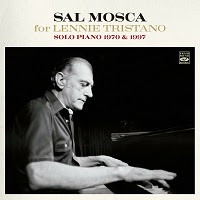
Sal Mosca - For Lennie Tristano · Solo Piano 1970 & 1997

Styles: Jazz
Year: 2022
Time: 49:01
File: MP3 @ 320K/s
Size: 112,8 MB
Art: Front

( 9:03) 1. You Go to My Head / Sweet Georgia Brown
( 4:28) 2. Talk of the Town
( 8:14) 3. All the Things You Are
( 2:15) 4. Prelude to a Kiss
(11:15) 5. Night and Day / These Foolish Things / That Old Feeling
( 6:46) 6. Sweet and Lovely
( 5:38) 7. In a Mist
( 1:19) 8. Stella by Starlight

During my seven-year archival project transferring all of Sal's personal recordings to the Institute of Jazz Studies (Rutgers Univ., Newark, New Jersey), I uncovered this reel-to-reel audio tape in Sal's Mt. Vernon, New York, studio, tucked away in a drawer in his corner desk separate from all of his other tapes. It was tied closed with a thick string from top to bottom as well as from side to side. On the back of the cardboard box, written in Sal's exquisite penmanship, were the words, “Solo Tape for Lennie Tristano, February 2, 1970.” I was so excited that this tape (if it was still playable) would have some really great early Sal Mosca piano playing. I had to wait a few weeks until I was able to locate a high-end tape player before I could listen.

In the interim, I wondered whether this was the source file. Sal's studio burnt in the mid-1970s, and he'd lost everything, including his piano. It was surprising to find anything like this from 1970 in this new studio. Did Lennie own this tape and return it? Or did Sal get it back after Lennie's death? From what I've been told, Lennie probably labelled it in Braille on the back cover. When I found this tape, I had already archived a few hundred hours of Sal's music. The recordings started as early as 1950. But I realized that this was the first complete recording of solo piano by Sal. It was more than five years earlier than Sal's first solo release, Sal Mosca Music, on Interplay Records. Finally, after hearing the first tune, You Go to My Head, I knew this was a special recording, and when I finished listening to both sides of the tape, I understood why Sal would have wanted to give this to Lennie or to record it specifically for him. It's one great pianist paying homage to another great pianist who happened to be his teacher, close friend, and one of his major influences; however, Sal, even with some obvious Lennie influence, remained true to himself throughout; he was able to pay and play tribute to Lennie without ever copying Lennie, yet on a feeling level, the influence is undeniable. But Sal was doing something new, especially with his sense of time, his unique sound, his melodic creativity, and his unmistakable multilined, two-handed approach to improvising. His love of Tatum, as a piano stylist, is also there.

As a result of this archiving project, the Mosca family and I had already released seven CDs on two separate albums for Sunnyside and Cadence Jazz. Whether to release this album or any of the previous posthumous albums carried a significant responsibility for me. I had to answer: “Does this add to Sal's legacy?” If this was the only recording someone heard of Sal, would it represent him? Is this music more than just historical? My feeling was and still is a resounding “yes!” It is historical as it is the earliest recording available of Sal's solo piano playing, but mainly it is thrilling to hear Sal's intense and electric improvising. It reveals where his solo piano playing was going, and how he might approach the standard tunes that he loved, the lines he wrote and played in the years to come. And if Sal felt that this was good enough to give to Lennie (and that is something impressive), then it is quite good to share with the rest of us.

Before I approached the Moscas with the idea of releasing this music, I needed further affirmation. It was just too important. Even though I knew Sal's music really well (we became very close friends during his last 10 years and played sessions and some gigs together for 7 years), I needed to consult with a few players who I thought also knew his playing intimately. I went to Larry Bluth, Connie Crothers, Jimmy Halperin, and Peter Prisco, all really wonderful jazz musicians, who either studied with Lennie or Sal. They agreed that this should be released. I also included two additional solo piano arrangements from 1997 that he was proud of. He played these two pieces, “In A Mist” and “Stella By Starlight,” on a WCKR-FM radio show in 1998 dedicated to his music.

Tenor saxophonist Jimmy Halperin, a student of both Lennie and Sal, is someone that I think will be forever linked with Sal's music and Sal’s teaching. Jimmy is an original improviser. Sal said of Jimmy, in a Cadence Magazine interview from 2001, “Jimmy is the most prepared student I ever had and the most professional student I ever played with.” It's so fitting that we were able to interview Jimmy regarding Sal, Lennie, and this album. I consider myself so very fortunate to have played with both Jimmy and Sal, as well as for being able to hear Sal perform solo or with Lee Konitz and Warne Marsh. The last time I played with Sal was on New Year's Day 2007 at Bird- land, NYC. He died in July, though he was able to perform in Europe for a series of concerts and workshops in January 2007. Sal was 80. I'm certain that you will enjoy this music and be thrilled and awed by it as I have been, perhaps as Lennie was too. —Don Messina, July 2021 

Sal Mosca, solo piano 
Recorded at Sal Mosca’s Studio, Mt, Vernon, NY, February 2, 1970 (#1-6); and 1997 (#7-8)

Sal Mosca for Lennie Tristano. Solo Piano 1970 and 1997

Victoria Rummler - Take Two

Styles: Jazz, Pop, Stage & Screen
Year: 2017
Time: 45:58
File: MP3 @ 320K/s
Size: 106,4 MB
Art: Front

(0:20) 1. 20th Century Fox Theme
(3:34) 2. Love Is Here to Stay (From "An American in Paris")
(3:00) 3. Theme from Le Ballon Rouge (From "Le Ballon Rouge")
(3:10) 4. The Pink Panther Theme (From "The Pink Panther")
(5:59) 5. Smile (From "Modern Times")
(4:01) 6. Frankly (From "Frankly")
(3:02) 7. Ascenseur pour l'échafaud (From "Lift to a Scaffold")
(1:00) 8. C'est le vent, Betty (From "Betty Blue / 37,2 Le Matin")
(4:11) 9. I Wanna Be Loved by You (From "Some Like It Hot")
(3:21) 10. Casablanca (From "Casablanca")
(3:43) 11. La chanson d'hélène (From "Les Choses De La Vie")
(3:02) 12. Theme from Le Ballon Rouge (From "The Red Balloon")
(2:18) 13. Cantina Theme (From "Star Wars")
(5:11) 14. Chanson de Delphine (From "Les Demoiselles De Rochefort")

It all started with a commission from the Théâtre du Bois d’Arcy near Paris, to do a jazz performance with a theme. I spontaneously chose “cinema,” probably due to the strong connection between jazz standards and movies. It also felt like an amusing challenge to juxtapose genres and make each piece a kind of short film for the ears. Since that first performance, the project has rolled around in my head, hibernated, and periodically resurfaced. Today it has finally emerged from my mind’s egg.

In the past, movie music meant lush orchestration, so in recording this album I decided to pull a musical u-ey: only voice and guitar, with as little arrangement as possible. The idea of working with different guitarists felt natural in light of the sweeping differences between the pieces, and it was thrilling to work with no less than five masters of the instrument: Lionel Loueke, Nguyên Lê, Federico Casagrande, Guilherme Monteiro and Dano Haider. Each of the songs reflects some aspect of my personal or creative journey. Cut! That’s a wrap! - Victoria Rummler, November 2016 

Personnel: Victoria Rummler (vcl), Federico Casagrande, Dano Haider, Guilherme Monteiro, Lionel Loueke, Nguyên Lê (g)

Take Two

Toots Thielemans - The Soul of Toots Thielemans

Styles: Swing, Bop
Year: 2010
Time: 41:24
File: MP3 @ 320K/s
Size: 95,6 MB
Art: Front

(5:19) 1. You Are My Sunshine
(5:24) 2. Nuages
(4:37) 3. Five O'Clock Whistle
(4:59) 4. Soul
(4:23) 5. Lonesome Road
(2:59) 6. Misty
(6:34) 7. Confirmation
(4:55) 8. Les Enfants S'ennuient Le Dimanche
(2:12) 9. Brother John

Not many European-born musicians have been admitted to the select inner circle of jazz innovators. One of them, of course, is the Belgian Jean Toots Thielemans. His amazing capacity to coax real music from a harmonica made of him a true virtuoso. And, as a guitarist, Toots also proved to be more than proficient at playing simple and eloquent, as we can appreciate in this charming program of nice music carried forth with taste, creativity and restrain.

This is by far the best album Jean Toots Thielemans has ever made. Nat Hentoff started his liner notes for the original Signature release in 1960 with this categorical statement. As for Thielemans, he regarded this album as a sort of graduate degree as the result of my assimilation of American life and the American jazz scene. Especially, my assimilation of the people who play, live and sing the blues. Thats why I wanted soul in the title of this album.

A cohesive rhythm section joined him for the date, with pianist Ray Bryant, bassist Tommy Bryant, and Oliver Jackson on drums. A superb trio, with Bryant delivering some bright piano solos in addition to his background duties. By and large, the feel of this set is pleasant, relaxed and swinging. Lets all rejoice in the fact that they went to the studio and did it.

Personnel: Toots Thielemans (harmonica, guitar); Ray Bryant (piano); Tommy Bryant (bass); Oliver Jackson (drums). Recorded in New York City, October 1959

The Soul Of Toots Thielemans

Harold Corbin - Soul Brother - The Driving New Jazz Piano of Harold Corbin + Bonus Tracks

Styles: Jazz
Year: 2014
Time: 37:19
File: MP3 @ 320K/s
Size: 86,8 MB
Art: Front

(3:02) 1. Soul Sister (LP Version)
(2:30) 2. Don't Blame Me
(3:06) 3. Rene
(3:02) 4. The Gypsy
(3:33) 5. Caroline
(3:40) 6. Jamf's
(2:47) 7. I've Never Been in Love Before
(3:17) 8. The Girl in the Window
(3:21) 9. Soul Brother
(3:27) 10. Tunga
(2:47) 11. Our Love Is Here to Stay
(2:41) 12. Soul Sister

Pianist Edwin Harold Corbin (1933-1962) was born in Philadelphia, Pennsylvania, where he began classical piano study when he was seven. At 20 he switched from classical to popular music and formed his own trio, working daytime as a city inspector and supplementing his income by playing as house pianist in several Philadelphia jazz spots until 1961. That year, he composed and recorded Soul Sister, which became a local hit single on the 20th Century label (tracks 11 & 12) and led to a contract with the Roulette Recording Company and top booking engagements.

In his debut album for Roulette, he revealed an eclectic style influenced by some of the greatest on the instrument, such as Garner and Jamal. He had the ability to write pieces redolent of his era, at times allied to a certain flair for fashionable funkmanship. His touch is percussive, spicing his lines with emphatic chord voicings, but he soloes with honest, unflashy guts. The effortlessly swinging support by Spanky DeBrest and Eddie Campbell is sensitive and restrained throughout, lending this set the easy, unforced quality. This was a persuasively driving and unaffected trio. Unfortunately, Corbins career ended in tragedy when he died of an overdose on April 1st, 1962, less than five months after the release of this album.

Personnel: Harold Corbin (p), Spanky DeBrest (b), Eddie Campbell (d) Sources: Tracks #1-10, from the album Soul Brother The Driving New Jazz Piano of Harold Corbin (Roulette SR 52079) Tracks #11 & 12, from the 45 rpm Twentieth Century 1215 Personnel in all tracks: Harold Corbin, piano; Spanky DeBrest, bass; and Eddie Campbell, drums. Recorded in New York City, June 1961 [#1-10], Philadelphia, early 1961 [#11-12] Roulette recordings produced by Henry Glover 20th Century single produced & engineered by Irvin Ballen (Gotham Records)

The Driving New Jazz Piano of Harold Corbin. Soul Brother

Sunday, July 6, 2025

Kenny Wheeler - Double, Double You

Styles: Jazz
Year: 1984
Time: 48:50
File: MP3 @ 320K/s
Size: 112,3 MB
Art: Front

(14:03) 1. Foxy Trot
( 3:49) 2. Ma Bel
( 7:46) 3. W. W.
(23:10) 4. Three For D'reen / Blue For Lou / Mark Time

Kenny Wheeler's string of ECM recordings are all quite rewarding, generally avoiding the ECM stereotype of introspective long tones and silence. A fiery but thoughtful trumpeter whose style can range from advanced swinging to sound explorations,

Wheeler is joined on this excellent set by tenor saxophonist Michael Brecker, pianist John Taylor, bassist Dave Holland and drummer Jack DeJohnette. They perform a set of Wheeler's originals and each of the world class musicians has an opportunity to be featured. A generally memorable outing. By Scott Yanow
https://www.allmusic.com/album/double-double-you-mw0000208011#review

Personnel: Kenny Wheeler – trumpet, flugelhorn; Mike Brecker – tenor saxophone; John Taylor – piano; Dave Holland – bass; Jack DeJohnette – drums

Double, Double You

Sammy Davis Jr. - Now

Styles: Jazz, Soul, Swing, Easy Listening
Year: 1972
Time: 40:59
File: MP3 @ 320K/s
Size: 94,8 MB
Art: Front

(3:13) 1. 01 The Candy Man
(3:35) 2. 02 This Is My Life
(3:02) 3. 03 I Am Over 25 - But You Can Trust Me
(3:26) 4. 04 Have A Little Talk With Myself
(3:58) 5. 05 Willoughby Grove
(4:29) 6. 06 Take My Hand
(2:33) 7. 07 I'll Begin Again
(2:48) 8. 08 I Want To Be Happy
(7:20) 9. 09 MacArthur Park
(2:27) 10. 10 Time To Ride
(4:02) 11. 11 John Shaft

Sammy Davis Jr. Now is a 1972 album by Sammy Davis Jr. The album features the number one hit "The Candy Man", a Grammy-nominated song. The rest of the album is made up of standards, big ballads and soul tracks.https://en.wikipedia.org/wiki/Sammy_Davis_Jr._Now

Now

JaLaLa - That Old Mercer Magic!

Styles: Vocal Jazz 
Year: 2009
File: MP3@320K/s
Time: 52:16
Size: 120,6 MB
Art: Front

(3:00)  1. Spring, Spring, Spring
(5:30)  2. You Must Have Been A Beautiful Baby
(3:35)  3. Jeepers Creepers
(4:22)  4. My Shining Hour
(4:24)  5. Accentuate The Positive
(3:34)  6. Dream
(3:29)  7. I'm Old Fashioned
(3:56)  8. Riding On The Moon
(7:29)  9. Moon River / Moon Country
(4:34) 10. Have You Got Any Castles Baby?
(2:18) 11. Too Marvelous For Words
(5:58) 12. The Dance Of Life

Janis Siegel has done a fair amount of recording away from the Manhattan Transfer during her decades-long tenure with the vocal group, but this a rare opportunity to hear her with other vocalists outside of it. JaLaLa, featured on four selections, includes Laurel Massé and Lauren Kinhan on vocals, with each singer leading individual selections.; the core group of musicians includes pianist Yaron Gershovsky, bassist David Finck, guitarist Frank Vignola, and drummer Matt Wilson, with guests added or substituted on some pieces. The songs selected from Johnny Mercer's vast output include both still-popular standards and obscurities, with the supporting cast varying from one track to the next. All three vocalists join forces for a fun-filled romp through "Ac-Cent-U-Ate the Positive" and the neglected "Spring Spring Spring," both of which add pedal steel guitarist Cindy Cashdollar. Siegel handles both "Jeepers Creepers" and "Too Marvelous for Words" effortlessly. Kinhan shines in the breezy bossa nova setting of "My Shining Hour," while Massé delivers a warm "Moon River" which is joined in a medley with the less familiar "Moon Country," a sauntering chart that features JaLaLa. Only the lame setting of "You Must Have Been a Beautiful Baby," saddled with the inane antics of DJ Sugarkone and a bland groove, proves disappointing.By Ken Dryden
https://www.allmusic.com/album/the-old-mercer-magic%21-mw0000820178

Personnel: Janis Siegel, Laurel Massé (vocals); David Finck (guitar, acoustic bass); Frank Vignola (guitar); Aaron Weinstein (mandolin, violin); Sara Caswell (violin); Margot Leverett (clarinet); Lew Soloff (trumpet); Yaron Gershovsky (piano); Matt Wilson (drums); Rich "Dusty Chopmeat" Zukor (djembe); Eric Elterman (hand claps).

That Old Mercer Magic!

Thursday, July 3, 2025

Tamuz Nissim - While Birds Fly

Styles: Vocal
Year: 2023
Time: 41:50
File: MP3 @ 320K/s
Size: 96,7 MB
Art: Front

(1:34) 1. Prelude
(4:52) 2. Lonely River
(7:22) 3. While Birds Fly
(3:48) 4. Dream Bigger
(3:53) 5. Breathe
(1:57) 6. What Should This Song Be About
(3:10) 7. Here We Go Again
(5:00) 8. Touch Me
(4:53) 9. Poets
(5:16) 10. A Voice

Award-winning Israeli vocalist Tamuz Nissim has been living and performing in NYC for the last four years. She performs alongside with some of the city's most acclaimed musicians in clubs like the Blue Note, Jazz Forum, The Bar 55, Deer Head Inn, Cornelia Street and many more, gaining the love of music lovers and Jazz aficionados alike.

Born in Tel Aviv ,Tamuz grew up in an artistic family; her mother is a dancer and a choreographer and her father is a writer. Both of them play an instrument and have a great love for classical and jazz music.

She started playing classical piano at the age of 6 and started to sing when she was 14 and was accepted to the Jazz music department of the Ironi Alef High School of the Arts. Her high school band appeared twice at an open stage at the Tel Aviv Jazz Festival. At this time she was a recipient of the America-Israel Coltural Foundation Grant for young talents in the arts. By the age of 16 she was performing around the city regularly with some of Israel's best jazz players to accompany her. In 2005 she sang in the soundtrack of Ilan Heitner’s movie ‘Bruno in Love’

She moved to the Netherlands in 2007 to study at the prestigious Royal Conservatoire of Den Haag; from there she received a Bachelor’s degree in Performing Arts, voice and side subject piano. In Holland besides many performances at the local Jazz clubs she also performed at the Amsterdam Israeli film Festival “Filmisreal” 2011 and her composition 'Shir' was featured in the Record “Love, Live ,Listen 2 - The Hague playlist” . In 2013 she performed at Holon Women's Festival in Israel, a common project with singer Martha Mavroidi. In 2015 was chosen as a finalist at "Riga Jazz Stage international vocal competition" and won to performed at "Riga Ritmis" International Jazz Festival in 2016. In 2015 Tamuz moved to New York City where she performs as a band leader and a guest singer for live shows and studio recordings.https://www.allaboutjazz.com/musicians/tamuz-nissim/

The Tel Aviv vocalist Tamuz Nissim returns with 10 new tracks, where George Nazos (guitar), Trifon Dimitrov (bass) and Joe Abba (drums) help create much diversity and warmth.

Nissim’s warm keys start the listen with the pretty and soft “Prelude”, and “Lonely River” follows with Nissim’s expressive pipes amid Abba’s agile drumming for the timeless jazz climate.

“Breathe” arrives at the halfway point, and is a rich delivery of gorgeous singing that suits the atmospheric bass and Nazos’ fluid guitar, while “Here We Go Again” benefits much from the meticulous drumming and graceful piano.

“Poets” and “A Voice” exit the listen, where the former is an intimate exploration into rich and poetic song craft, and the latter finishes with a dreamy, mesmerizing delivery that builds into firm scatting and playful rhythm.

Nissim has been living and performing New York City for the last 5 years, and that experience certainly resonates across these heartfelt and gripping jazz songs that will be globally appreciated. https://takeeffectreviews.com/october-2024-2/2024/10/21/tamuz-nissim

Recorded live at Trading 8s Studios in NJ March 7 2023. 

While Birds Fly

Tuesday, July 1, 2025

Lee Morgan - Here's Lee Morgan (Disc 1) And (Disc 2)

Styles: Trumpet Jazz
Year: 1960
File: MP3@320K/s
Time: 37:17 (Disc 1)
Size: 86,1 MB (Disc 1)
Time: 65:35 (Disc 2)
Size: 151,4 MB (Disc 2)
Art: Front

Disc 1

(5:17)  1. Terrible ''T''
(7:42)  2. Mogie
(5:36)  3. I'm A Fool To Want You
(6:03)  4. Running Brook
(6:13)  5. Off Spring
(6:23)  6. Bess

This CD reissue has its original six songs expanded to 11 with the inclusion of five alternate takes. The music is good solid hard bop that finds Lee Morgan (already a veteran at age 21) coming out of the Clifford Brown tradition to display his own rapidly developing style. Matched with Clifford Jordan on tenor, pianist Wynton Kelly, bassist Paul Chambers and drummer Art Blakey, Morgan's album could pass for a Jazz Messengers set. ~ Scott Yanow  http://www.allmusic.com/album/heres-lee-morgan-mw0000188579

Personnel: Lee Morgan (trumpet, flugelhorn); Clifford Jordan (tenor saxophone); Wynton Kelly (piano); Paul Chambers (bass); Art Blakey (drums).

Disc 2

(5:42)  1. Terrible ''T'' (take 7)
(6:53)  2. Terrible ''T'' (take 6)
(7:25)  3. Mogie (take 2)
(7:31)  4. Mogie (take 1 mono)
(5:54)  5. I'm A Fool To Want You (take 1)
(5:43)  6. I'm A Fool To Want You (take 2)
(6:16)  7. Running Brook (take 9)
(6:50)  8. Running Brook (take 4)
(6:39)  9. Off Spring (take 7)
(6:38) 10. Bess (take 3)

Clark Terry - Daylight Express

Bitrate: MP3@320K/s
Time: 63:52
Size: 146.2 MB
Styles: Bop, Trumpet jazz
Year: 1998
Art: Front

[2:00] 1. Caravan
[2:20] 2. Candy
[2:28] 3. Clark's Expedition
[4:04] 4. Trumpet Mouthpiece Blues
[3:01] 5. Phalanges
[4:31] 6. Blues For Daddy-O's Jazz Patio Blues
[2:43] 7. Basin Street Blues
[2:15] 8. Daylight Express
[2:18] 9. Taking A Chance On Love
[6:52] 10. Festival
[3:36] 11. Clark's Bars
[2:14] 12. Daddy-O's Patrio
[4:58] 13. Blues
[4:18] 14. Impeccable
[2:46] 15. Paul's Idea
[3:16] 16. Phat Bach
[2:31] 17. Milli Terry
[4:00] 18. Funky
[3:31] 19. The Girl I Call Baby

Bass – Jimmy Woode; Drums – Sam Woodyard; Flute, Saxophone – Mike Simpson (5) (tracks: 1 to 9); Guitar – Remo Biondi (tracks: 1 to 9); Piano – Willie Jones (7); Tenor Saxophone – Paul Gonsalves (tracks: 10 to 19); Trumpet – Clark Terry.

Two obscure but very enjoyable and complementary former Lps are reissued in full on this generous CD. The first half of the disc is primarily a showcase for trumpeter Clark Terry who is joined by Mike Simpson (on tenor and flute) in a sextet. C.T. sounds a bit more influenced by Dizzy Gillespie at this time than he would but he was already quite distinctive on such numbers as "Candy," "Blues For Daddy O's Jazz Patio Blues" and "Basin Street Blues." "Phalanges" is a hot bop line (by Louie Bellson) that deserves to be revived while "Trumpet Mouthpiece Blues" sounds like an ancestor of "Mumbles." The second half of the album matches Terry with tenor-saxophonist Paul Gonsalves (who is actually the leader) and a rhythm section that features some surprisingly advanced piano from Willie Jones that sometimes hints strongly at both Cecil Taylor and Sun Ra! Terry and Gonsalves (who were both with Duke Ellington at the time) always made for a good team. The tenor revisits the 1956 Newport Jazz Festival with his long solo on "Festival" and other tunes (all originals by one of the horn players) are basic and swinging; a previously unissued ballad, "The Girl I Call Baby" closes the rewarding and memorable set. Highly recommended. ~Scott Yanow

Daylight Express

Antonio Zambrini & Rita Marcotulli - La Conversazione

Styles: Piano Jazz
Year: 2013
File: MP3@320K/s
Time: 42:17
Size: 98,6 MB
Art: Front

(3:40) 1. Beatriz
(3:15) 2. Natale a Riminni
(2:26) 3. Garrincha
(5:49) 4. Small Ballad
(6:11) 5. La Strada
(5:39) 6. Melamp
(2:25) 7. Passato di Vedura
(3:35) 8. Giant Steps
(3:18) 9. Antonia
(2:35) 10. Canto Triste
(3:19) 11. Here's That Rainy Day

Born 1959, Rome, Italy. Playing piano from early childhood, Marcotulli studied classical music at the Santa Cecilia Conservatory before being drawn to Brazilian music. She also began moving onto the fringes of jazz and established a local reputation at first, before becoming well known among contemporary jazz audiences both at home and abroad. This was largely due to playing with musicians such as Chet Baker, Richard Galliano, Jon Christensen, Palle Danielsson, Peter Erskine, Steve Grossman, Joe Henderson, Hélène La Barrière, Joe Lovano, Tony Oxley, Michel Portal, Enrico Rava, Michel Bénita, Aldo Romano and Kenny Wheeler. In 1987 she was nominated for the Best Young Talent award in the Music Jazz Poll and the following year she was a member of Billy Cobham’s band, touring Europe and the USA and appearing on 1989’s Incoming. She spent some time in Sweden, before returning to Italy in the early 90s. In the late 90s, she played the San Remo festival in duo with Pat Metheny and also appeared as a member of a piano trio, with Paul Bley and John Taylor, at the Olympic Theatre of Vicenza.

Among other musicians with whom Marcotulli has worked and sometimes recorded are Sal Nistico, Pino Daniele, Andy Sheppard, Charlie Mariano, Marilyn Mazur, Roberto Gatto, Bob Moses, and she has had a long-term musical relationship with Dewey Redman. Marcotulli has claimed the influence of musicians such as Thelonious Monk, Bill Evans and John Coltrane. A highly skilled performer, she chooses to play in a style that derives as much from pop and folk as jazz. In addition to playing in jazz circles, Marcotulli has also composed music for the dance theatre and for films. By AllMusic
https://www.allmusic.com/artist/rita-marcotulli-mn0000808191/biography

La Conversazione

Sunday, June 29, 2025

Riccardo Arrighini, Paolo Benedetti, Michela Lombardi - La Donna Cannone

Styles: Piano Jazz
Year: 2006
File: MP3@320K/s
Time: 79:21
Size: 186,3 MB
Art: Front

( 8:20) 1. E Lucean le Stelle
( 9:31) 2. La Donna Cannone
( 7:23) 3. Anatolia
(11:31) 4. Sous le Ciel de Paris
(10:00) 5. E Dimmi Che Non Vuoi Morire
( 7:27) 6. Giu' la Testa
( 5:51) 7. Nel Respiro
( 6:00) 8. Last Tango in Paris
( 8:30) 9. On the Trail
( 4:43) 10. Dream Youfr Fears Away

Riccardo Arrighini is the pianist who fused Classical music with Jazz. With its arrangements, it aims to bring a breath of fresh air to the works of the great composers, passing through the culture and thirty years of experience of studied, played and taught music. Two enormous heritages such as classical and jazz, two basic cultures such as European and American blend in him in a pianism that is finally free from schemes and barriers. He was born in Viareggio on August 28, 1967. He began studying classical piano at the age of seven and after a few months he won the national competition for young pianists in Osimo. After graduating from the 5th year of studies, he obtained admission as an intern at the Conservatory â € œL.Boccheriniâ € in Lucca, where he graduated with full marks in 1986, under the guidance of Prof. Clara Cesa Luporini. After a few years in which he toured all over Italy with pop or dance music orchestras, and as an accompanist for opera singers, he began studying jazz in 1990 at the â € œSiena jazzâ € seminars held by maestro Enrico Pieranunzi and at the summer courses â € œUmbria jazz Clinicsâ € in Perugia, where he won a scholarship to travel to the USA.

In 1991 he enrolled at the Berklee College of Music in Boston, MA - USA, where he attended a semester and where he had the opportunity to take his first professional steps in the world of jazz. After two years of stopover, during which he plays in the best Tuscan clubs, he returns to Boston and studies privately with masters Jerry Bergonzi and Hal Crook for another semester (1993). Between 1995 and â € ™ 97 he attended the Siena Jazz â € œHigh Professional Qualificationâ € courses, held by Mo Stefano Battaglia and where he graduated in 1997.

In 1996 he participated in the television program â € œMedicine a comparisonâ € by Daniela Rosati, broadcast on Retequattro and â € œBaciami Versiliaâ € by Gianni MinÃ, broadcast on Raidue. In the same period he won the â € œBarga jazz 1996â € competition with his trio for the section dedicated to new talents. He then begins to propose himself, as well as an improviser, also as a composer performing a repertoire of only original pieces that will lead to the first recordings of him in his name. In 1999 and 2000 he was called by maestro Bruno Tommaso to be part of the Barga Jazz orchestra, where he had the opportunity to meet and play with some of the most important names in the Italian jazz scene.

In 2003 the meeting with the 14 year old Sicilian, and extraordinary sax talent, Francesco Cafiso, personally invited by Maurizio Costanzo to the Canale 5 studios, for the transmission â € œfriendsâ € by Maria de Filippi and â € œBuona Domenicaâ €. An excellent human and musical partnership was born immediately between the two. In 2004 he plays with Cafiso at the summer edition of Umbria Jazz and the official quartet of the saxophonist is formed with Arrighini on the piano, Aldo Zunino on the bass and Stefano Bagnoli on the drums. The quartet, from 2004 to 2007, will play in the most important Italian and world jazz festivals. The collaboration with Cafiso ends in early 2008. Since 2006 he has had a trio in his name, with Riccardo Fioravanti on bass and Stefano Bagnoli on drums, with whom he recorded the cd â € œCambio di Marciaâ € presented at â € œUmbria jazz â € ˜07â €.

In 2007 he elaborates a double project on the figure of Giacomo Puccini, solo piano and orchestra, which obtains the support of Umbria Jazz and the Pucciniano Festival Foundation with which in 2008 he participates in important international concerts in the IICs of Tokyo, Kyoto, London, Amsterdam, Stockholm Ankara and Izmir and recorded two discs, "Puccini jazz. Recondite harmonie" (piano solo) and "Puccini jazz: E lucevan le stelle" (trio plus Orchestra dei Solisti di Perugia). With the aforementioned orchestra he participates in events of great media importance such as the "International Music Festival" (21.6.'08) in Perugia, where for the occasion the church of San Francesco al Prato is reopened - formerly the temple of UJ for concerts historians such as Sting & Gil Evans of '87 - and Umbria jazz '08 at the Morlacchi theater.

In August '08 he took part in the important "Ischia Piano Jazz" festival, sponsored by UJ, a solo piano festival alongside Danilo Rea, Enrico Pieranunzi and Stefano Bollani. In 2008 he comes out with a new reworking of great classics, â € œVivaldi Jazz: Le 4 Stagioniâ €, in piano solo and trio, whose tour starts in June â € ™ 09 and will touch all of Italy. For many years he has been successfully dedicated to teaching classical and jazz with students who come from all over Italy. He has reworked all the techniques of jazz harmony and improvisation, learned in the seminars and schools mentioned above, merging and reworking them in his own very personal method. For about 3 years he has been holding workshops and seminars in the Conservatories and in the Italian and foreign Music Study Centers based on the fusion between Jazz and Classical. Of note is the one held in 2006 in San Paolo (Brazil) at the Antonio Carlos Jobim Study Center. https://www-amicidellamusicamilano-it.translate.goog/artisti/a/RiccardoArrighini.html

La Donna Cannone