Sunday, May 25, 2025

Win Pongsakorn - Time Has Changed

Styles: Trumpet Jazz
Year: 2024
Time: 58:30
File: MP3 @ 320K/s
Size: 134,5 MB
Art: Front

(5:51) 1. Man In The Mirror
(5:18) 2. Pensri
(5:57) 3. Hummingbirds At Balata Garden
(6:16) 4. Time Has Changed
(5:40) 5. Caipirinha
(6:12) 6. Will You Still Love Me Tomorrow
(5:35) 7. You're Getting To Be A Habit With Me
(5:59) 8. Theme For Ernie
(6:10) 9. Imagination
(5:26) 10. Pearls

Time Has Changed is the second recording as leader by trumpeter Win Pongsakorn who was born in Bangkok, Thailand, but has been firmly wedded to American-style contemporary jazz since he started playing trumpet at age fourteen in 2011. As on his debut album, Yes, It Is! (Cellar Music, 2020), Pongsakorn is backed by a stellar rhythm section overseen by the elebrated pianist David Hazeltine with Paolo Benedettini on bass and Jason Brown on drums.

Unlike that initial enterprise, on which Pongsakorn composed seven of eight numbers, he has written only four (of ten) this time around—including the next four in a row after Glen Ballard and Sarah Garrett's opening theme, the trim and handsome "Man in the Mirror." Besides the graceful title song, they include the waltz-like "Pensri," gently swaying "Hummingbirds at Balata Garden" and limber "Caipirinha." Pongsakorn then turns elsewhere with largely admirable results, covering Carole King's "Will You Still Love Me Tomorrow," the standard "You're Getting to Be a Habit with Me," Fred Lacey's pensive "Theme for Ernie" and "Imagination" (not the standard) before closing with Hazeltine's sleek and shiny "Pearls."

Much of the rationale for the complimentary appraisal rests on Pongsakorn's singular ability to embrace and enhance the heart and soul within any song, owing to his keen and soulful approach. In reviews of his earlier album, Pongsakorn was compared to such masters as Blue Mitchell, Carmell Jones and Bobby Shew, among others, and he offers no reason to amend that opinion. The phrases are logical and clean, the tone is pure, and the improvisations are sharp and perceptive. An impartial listener might arguably contend that Pongsakorn plays older than his age, which is not yet thirty.

Ponsakorn also benefits from the expertise of his rhythm section, which not only provides staunch and unerring support but shares solo honors on most tracks, with Hazeltine, as always, especially creative and pleasing. Anyone who may have expected a sophomore slump from Pongsakorn will find no trace of one here. Yes, Time Has Changed, but that alteration has done nothing to lessen Pongsakorn's skills or demeanor. Indeed, based on the evidence presented here, a persuasive argument could be made that he is becoming an even more focused and inventive artist as time goes by. By Jack Bowers https://www.allaboutjazz.com/time-has-changed-win-pongsakorn-cellar-music-group

Personnel: Win Pongsakorn – Trumpet; David Hazeltine – Piano; Paolo Benedettini – Double Bass; Jason Brown – Drums

Time Has Changed

Wednesday, May 21, 2025

Kenny Wheeler, Norma Winstone & London Vocal Project - Mirrors

Styles: Jazz, Post-Bop
Year: 2013
File: MP3@320K/s
Time: 69:40
Size: 160,0 MB
Art: Front

(5:21)  1. Humpty Dumpty
(3:58)  2. The Broken Heart
(5:36)  3. The Lover Mourns
(7:48)  4. Black March
(8:59)  5. Through the Looking Glass
(3:59)  6. The Hat
(5:57)  7. Breughel
(8:37)  8. Tweedledum
(6:16)  9. The Bereaved Swan
(8:42) 10. The Deathly Child
(4:22) 11. My Soul

That trumpeter/flugelhornist/composer Kenny Wheeler is challenging himself at 80 is surely inspirational. Mirrors represents his first recording where poems provide the music's source, though he composed the music over 20 years ago. The project was then commissioned for five solo voices in 1998, but the combination of Wheeler, singer Norma Winstone and the London Vocal Project, led by Pete Churchill, brings a fluid, suite-like permanency and epic scale to the original concept. Poets Stevie Smith, Lewis Carroll and W.B. Yeats provide strikingly diverse imagery surreal, visceral and profound and Wheeler weaves it all together in a sumptuous melodic tapestry where the music of language is meaning enough. The inimitable Winstone's strength and nuanced delivery belie her 70 years. Hers is a remarkable performance, though the balance struck between all the voices makes Mirrors a truly collaborative success. Bassist Steve Watts, drummer James Maddren and pianist Nikki Iles engender a swinging undercurrent, breezy and understated, that's irrevocably felt throughout. These musicians enjoy tremendous understanding; Winstone and Wheeler first recorded together in Azimuth in the 1970s and Iles, saxophonist Mark Lockheart, Watts and Maddren all play with Winstone in the group Printmakers. Little wonder, then, that the evident chemistry seems so effortless and joyfully intuitive.

The LVP's seven sopranos, eight altos, five tenors and five basses are the protagonists on three numbers. "Humpty Dumpty" is a playful take on Carroll's poem, with delightful passing around of the vocals between the choir sections. A deceptive intensity inhabits the mantra-like vocal rhythm of Smith's "The Broken Heart," a particularly hypnotic number punctuated by Wheeler's fine bluesy solo. Wheeler and Iles shine on a swinging arrangement of Smith's "Black March," though its buoyancy derives primarily from the snappy choral cadences. Winstone's performance sets the jewel in the crown. Her dreamy, almost ethereal reading of Carroll's "Through the Looking Glass" is wonderfully sympathetic. A rootsy and mellifluous instrumental passage, driven by Wheeler and Lockheart, serves as an interlude before the choir restores the contemplative mood. Carroll's "Tweedledum" is similarly episodic; jaunty in the choral passages, intimate and spare when Winstone holds court, and swinging when the quintet steps up. The singer, Iles and Lockheart confer a gentle majesty on Smith's seemingly throwaway, four-line poem, "My Hat."

Winstone and Iles treat the ghostly subject matter of "The Deathly Child" with a palpable sense of wonder, though when Winstone sits out the ensemble refashions this harbinger-of-death tale into joyous celebration. The fatalistic view of humankind's condition in Smith's "Breughel" is similarly dressed in more soothing robes by a lovely Burt Bacharach-esque melody. "The Bereaved Swan" captures the contrasting elements of melancholy and lyricism in Smith's words, whereby the choir's graceful waves form a canvas for Wheeler and Lockheart's more emotionally urgent colors. The subdued rhythm of "My Soul" highlights the powerful lyric content, lent suitable poignancy by Winstone's pitch-perfect delivery. How to categorize this glorious music, the ingenuity of Wheeler, Winstone and the LVP? To quote Smith: "Whatever names you give me, I am a breath of fresh air, a change for you." And what price Vol. 2 from James Joyce, via Robert Frost to John Cooper Clarke? ~ Ian Patterson https://www.allaboutjazz.com/mirrors-kenny-wheeler-edition-records-review-by-ian-patterson.php
 
Personnel: Kenny Wheeler: flugelhorn; Norma Winstone: vocals; Nikki Iles: piano; Mark Lockheart: saxophones; Steve Watts: double bass; James Maddren: drums; London Vocal Project: Pete Churchill: Director; sopranos: Fini Bearman; Hannah Berry; Jessica Berry; Helen Burnett; Katie Butler; Joanna Richards; Janni Thompson; tenors: Tommy Antonio; Sam Chaplin; Brendan Dowse; Richard Lake; Adam Saunders; altos: Mishka Adams; Paolo Bottomley; Nikki Franklin; Clara Green; Andi Hopgood; Chloe Potter; Emma Smith; Emmy Urquhart; basses: Kwabena Adjepong; Pat Bamber; Ben Barritt; Pete Churchill; Andrew Woolf.

Mirrors

Jackie Wilson - You Ain’t Heard Nothin’ Yet

Styles: Soul
Year: 1961
Time: 29:33
File: MP3 @ 320K/s
Size: 68,4 MB
Art: Front

(2:06) 1. Toot Toot Tootsie Goodbye
(3:41) 2. Sonny Boy
(1:45) 3. California Here I Come
(2:46) 4. Keep Smiling at Trouble (Trouble’s a Bubble)
(3:23) 5. You Made Me Love You (I Didn’t Want to Do It)
(2:38) 6. My Yiddishe Momme
(2:02) 7. Swanee
(2:56) 8. April Showers
(3:09) 9. Anniversary Song
(2:49) 10. Rock-A-Bye Your Baby With a Dixie Melody.mp3
(2:35) 11. For Me and My Girl
(2:25) 12. In Our House

I suppose that my knowledge of the history of American pop culture still leaves a lot to be desired, because it was not until my second listen to Jackie Wilson’s You Ain’t Heard Nothin’ Yet, accompanied with a look at Jackie’s own liner notes on the back cover, that I realized the entire LP was a concentrated, half-hour-long tribute to Al Jolson, Jackie’s personal childhood idol and a dear friend to such a great number of other artists, both black and white. The problem is that, while I do enjoy digging into the vaults of American popular music from the pre-war era, it is mostly on behalf of jazz or blues artists, with an occasional bit of folk, country, or, at most, the Andrews Sisters thrown in; people who, like Al Jolson, were more about vaudeville and show business in general the Neil Diamonds and Tom Joneses of their era interest me far less, and inspire me even lesser. (That’s right, I did not even immediately catch on to the title of the LP, which should immediately bring on associations with The Jazz Singer though I do wonder about exactly what percentage of modern young Americans would bring out that particular association faster than I did).

In a way, though, this album was an inevitability. Tribute LPs to legendary artists from the previous decades were becoming a standard thing in the early Sixties, partially due to the first generations of recorded legends beginning to pass away and partially due to the record industry’s yearning for the «good old clean days»: nothing could wipe off the scum of rock’n’roll better than a reappraisal of the comparatively innocent values of grandpa and grandma music. From LaVern Baker to Sam Cooke, everybody on the R&B circuit was doing these and for Jackie Wilson, Al Jolson probably seemed like the perfect choice: The King Of Black Entertainment paying homage to The King Of Blackface Entertainment. The only problem was that for both artists, «entertainment» meant the visual aspect almost as much as the aural; to complete the comparison, people should not only hear both artists, but see them as well, and you didn’t really get to do that in 1961.

My own problem with Al Jolson, of course, lies not in the blackface department (it is almost undignified to hold lengthy ethical debates on whether we should condemn hundred year old practices), but rather in the fact that Al Jolson arrived on the American pop scene too early to make his presence properly redeemable. The love people had for the guy was the same kind of love people show toward Luciano Pavarotti singing O sole mio or, at best, Nessun dorma it’s all about those immensely amplified F-E-E-L-I-N-G-S, inflated to the size of 800cc silicone mammaries and there was never any space for subtlety or emotional sophistication out there because that was simply not what the fans needed. Probably more than anyone else out there in the Radio Age, Al Jolson was the champion of the «give the people what they want» approach, and if not for the unfortunate practice of blackface (which is, after all, what the people also wanted), Al Jolson should have become the perpetual mascot of the pop market, more relevant in that role today than he’d ever been.

But at least one thing you cannot take away from Al Jolson is that, in his heyday, he was cutting edge at least, in taking the combination of those bombastically orchestrated folk ballads with those soaring melodramatic Yiddishe vocals into the studio and spreading it all over the country. On the other hand, having Jackie Wilson who, for a very brief while, may also have been cutting edge in his R&B showmanship try to put his own early Sixties stamp on a set of Al Jolson’s classics feels almost like an artistic surrender. At his best, with songs like ‘Reet Petite’ or ‘Lonely Teardrops’, Wilson was carrying on Jolson’s torch, but it was fueled by a whole other approach to making music; here, he is simply content with reusing what is left of the old stocks of musical oil, so the whole thing feels decidedly regressive rather than progressive.

Of course, the world has moved on. Better recording equipment, tighter backing bands, louder and more bombastic pro­duction values and a powerhouse singer with one of the best throats in the business, making poor old Al with his old-timey crooning feel like a homeless schmuck by comparison. But even if you are a big fan of both Al Jolson (which I am not) and Jackie Wilson (which I am, but strictly limited to the good stuff), I am not entirely sure that You Ain’t Heard Nothin’ Yet shall properly justify its title for you. 1920’s vaudeville remade as early 1960’s orchestrated soul-pop simply may not have been that great an idea.

A song like ‘Toot, Toot, Tootsie, Goo’ Bye!’, for instance, works fine as an ass-kickin’ flapper anthem for the Jazz Age and it can even maintain its slightly hooliganish flavor when remade as contemporary pop-rock by the likes of Brenda Lee. But when Jackie decides to open it with a slow, suspenseful soul intro ("I’m telling you baby I’ve gotta leave you now...!"), he sets our expectations up for something completely different and then launches into the very same vaudeville mood of 1922. It’s a crude transition, and since it is right there at the start of the LP, it symbolically tells us that this whole thing probably won’t work. It’s all just a meaningless nostalgia trip.

Now I won’t be taking any real cheap shots, for instance, guffawing at the idea of a black boy from Highland Park, Michi­gan, trying to put his imprint on a song like ‘My Yiddishe Momme’ considering that the song is placed on a tribute album to a Jewish popular artist who spent half his life performing in blackface, the joke would be on me anyway. (Fun fact, though: apparently, Jolson himself never performed or recorded ‘My Yiddishe Momme’ the song is rather associated with Sophie Tucker so I guess Wilson just put it here as a symbolic nod to Jolson’s ethnic and cultural heritage). Much has been written about the mutual empathy and elements of «cultural symbiosis» between Jewish and Black populations in pre-war America (let my people go and all that), making the gesture feel very reasonable. But it would have felt much more reasonable on the part of somebody like Paul Robeson, the freedom fighter, than Jackie Wilson, the entertainer.

The problem is that throughout the album, Jackie really, really wants to be Al Jolson, the Al Jolson of the Jazz Singer era, but only on those early Sixties’ vocal and instrumental steroids. For sure, he is in peak vocal form, way too peak for my tastes, groveling and worshipping at the altar of these old vaudeville tunes rather than taking them the same way we should be taking them today, or our grandparents should have been taking them in 1961 that is, with a sparkle of irony, perhaps acknowledging their musical merits but chuckling at their emotional innocence and unabashed sentimentality. Quite the opposite: he seems to be taking all of this with far more seriousness than Jolson did himself, and all that bombast which could have, for instance, be successfully applied to a truly modern soul sound (just imagine Jackie Wilson taking on, say, Sam Cooke’s ‘A Change Is Gonna Come’ three years later!), is ultimately wasted on corny old-timey trifles with corny old-timey titles like ‘Keep Smiling At Trouble (Trouble’s A Bubble)’.

There are no individual comments I can make on any of these songs: you either appreciate the idea of the album, in which case you’ll sympathize with all of them, fast or slow, danceable or sentimental or you find it crass and mismatched, in which case the album (unlike Al Jolson’s original recordings) will hardly trigger even historical interest: what sort of music history buff might get excited at the perspective of one fluffy pop entertainer paying tribute to another one? At least Jackie had the good sense not to put out any of these covers as singles. But there is hardly a single gesture in his career more symbolic than this one or more telling whenever we begin to wonder about the exact reasons why Jackie Wilson, ruler supreme of the R&B charts for at least half a decade, has been all but forgotten by critical history when so many of his less commercially successful peers have remained far above footnote status in the same history books. https://onlysolitaire.substack.com/p/review-jackie-wilson-you-aint-heard

You Ain’t Heard Nothin’ Yet

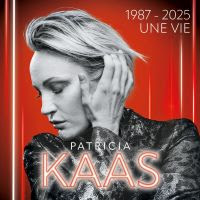
Patricia Kaas - 1987-2025 Une Vie CD 1, CD 2


Patricia Kaas - 1987-2025 Une Vie CD 1
Styles: Vocal
Year: 2025
Time: 57:12
File: MP3 @ 320K/s
Size: 132,5 MB
Art: Front

(4:05) 1. Entrer dans la lumière
(4:20) 2. Quand j'ai peur de tout
(3:19) 3. Kennedy Rose
(3:46) 4. Les hommes qui passent
(5:14) 5. Ceux qui n'ont rien
(3:01) 6. Une dernière semaine à New York
(2:40) 7. Mon mec à moi (Live)
(3:31) 8. Une fille de l'Est
(4:19) 9. Je voudrais la connaître
(3:08) 10. Adèle
(3:28) 11. Le jour et l'heure
(5:52) 12. Avec le temps (Live)
(5:48) 13. Ma liberté contre la tienne
(4:33) 14. Quand on a que l'amour


Patricia Kaas - 1987-2025 Une Vie CD 2
Time: 60:59
File: MP3 @ 320K/s
Size: 141,1 MB
Art: Front

(3:22) 1. Mademoiselle chante le blue (Live)
(4:43) 2. Il me dit que je suis belle
(4:30) 3. D'Allemagne (Live)
(4:45) 4. Quand Jimmy dit
(4:59) 5. L'aigle noir
(5:30) 6. Les chansons commencent
(3:30) 7. Rien ne s'arrête
(3:33) 8. C'est les femmes qui mènent la danse
(5:18) 9. La vie en rose
(4:20) 10. Hymne à l'amour
(4:24) 11. If You Go Away
(3:22) 12. Je le garde pour toi
(4:46) 13. Toute la musique que j'aime
(3:51) 14. Les Yeux de ma Mère

This Friday, April 25, 2025, Patricia Kaas returns to the spotlight with a landmark album, a best-of album as touching as it is essential: "1987-2025: A Life."

Patricia Kaas's voice is, first and foremost, a timbre that is instantly recognizable. Warm, deep, sometimes raspy, always unsettling. A voice that tells the story of France in all its most sensitive and contrasting aspects: love and hurt, nostalgia and enthusiasm, memories and hopes.

It's also a voice that has conquered the world. Few French-speaking artists can boast of having sold more than 20 million albums in their career. Patricia Kaas has done just that; from Berlin to Moscow, from Paris to Tokyo, we still sing her choruses.

"1987-2025: A Life," a 38-year career in 28 songs

With "1987-2025: A Life," available as a double CD this Friday, April 25, 2025, the singer from Lorraine offers us much more than a classic best-of. She takes us on a true journey through time, a musical epic in 28 carefully selected tracks. These songs are not only emblematic pieces from her repertoire; they are also chapters in a love story between an artist and her audience.

Of course, it features the great collaborations that have marked her career. Jean-Jacques Goldman, Didier Barbelivien, Pascal Obispo, François Bernheim, Michel Mallory... so many writers who have written for her, and with her, lyrics that are both powerful and sensitive. More recently, Ben Mazué has added his contemporary touch to this already rich adventure.

Tributes and Covers: Passing on a Passion
This new best-of album doesn't just revisit the past. Patricia Kaas also includes vibrant tributes to the artists who inspired her. She covers "Les Yeux de ma mère" by Belgian singer Arno, who passed away in 2022. A previously unreleased song that concludes this double CD.

In addition, other great classics of French song are included: "L'Aigle Noir" by Barbara, "La Vie en Rose" by Édith Piaf, "Avec le Temps" by Léo Ferré, and "Toute la musique que j'aime" by Johnny Hallyday. So many monuments revisited with precision and humility, in the manner of a woman who knows what it means to pass on, bring to life, and enhance musical heritage.

A daughter of the East, a woman of the world
Patricia Kaas has remained true to her roots. Originally from Moselle-Est, she has always proudly claimed this place. But her music has transcended all borders. Her voice is universal, her songs resonate with each of us, whether we're from here or elsewhere.

"1987-2025: A Life" is also the story of this woman who has transcended the ages without ever betraying who she is. An artist of integrity, modesty, yet always whole. A performer who sings with her soul, and who, through the filters of time, continues to move with a rare intensity.

"1987-2025: A Life" is much more than a simple retrospective album. It's a declaration of love to the public, a celebration of an extraordinary artistic journey, a link between yesterday and tomorrow. Available as a double CD starting Friday, April 25, 2025, and on triple vinyl starting May 23, 2025.https://www.francebleu.fr/patricia-kaas-signe-son-grand-retour-avec-1987-2025-une-vie-5516494

1987-2025 Une Vie Cd1, Cd2

Friday, May 16, 2025

Dan Gabel and The Abletones - Live!

Styles: Traditional Jazz, Swing, Big Band
Year: 2019
Time: 65:18
File: MP3 @ 320K/s
Size: 151,6 MB
Art: Front

(4:26) 1. Whispering (opening theme) Song of India
(3:47) 2. Swanee River
(2:05) 3. Almost Like Being in Love
(4:28) 4. I Know Why (And So Do You)
(2:48) 5. Sun Valley Jump
(3:29) 6. Moon Ray
(4:02) 7. Moonlight in Vermont
(2:59) 8. Hot-Cha Cha-Cha
(3:25) 9. American Patrol
(2:58) 10. All the Things You Are
(2:45) 11. L-O-V-E
(2:53) 12. Tuxedo Junction
(3:40) 13. Just The Way You Look Tonight
(2:53) 14. East-Side, West-Side (The Sidewalks of New York)
(2:35) 15. Fly Me To the Moon
(3:42) 16. Boogie Blues
(4:21) 17. Moon River
(3:38) 18. Mack the Knife
(3:30) 19. It Had to Be You
(0:44) 20. The Abletones Jive (closing theme)

Picture this: You’re eating dinner in a crowded ballroom surrounded by couples all dressed to the nines. The stage is set. Big Band stand fronts, vintage instruments and derby mutes line the back row. The lights come up, and eighteen musicians, clad in matching tuxedos, blue vests and pocket squares enter from the wings, their highly polished shoes shining as they take the stage. The bandleader, in his white dinner jacket and spats counts off the first number as the vocalist in her shimmering ball gown appears just in time for her entrance. I’m sure you’re picturing a nightclub or a dance hall circa 1939 but no. It’s a wintry evening in 2018 at Mechanics Hall in Worcester, MA and Dan Gabel and The Abletones are doing what they do best transporting their audience back in time with the sights and sounds of the Big Band era.

In mid-January (2018) we had a busy week playing a series of one-nighters from Boston to Long Island. Our last gig of the week was at Mechanics Hall in Worcester for their annual Winter Soiree. Everything seemed to come together perfectly: the band was hot, the hall was aglow, and the dance floor was packed all night. Fortunately for us, Hannah Truckenbrod joined us for this show. Fortunately for you, this memorable evening was recorded!

I am thrilled to present this album of live recordings. No edits were made, nor any post-production processing used. What you hear on the record is what we performed that night thanks to the expertise of recording engineer Mr. Joe Chilorio. So, sit back, relax, or jump up and dance to: The Abletones Live!

Live!

Buddy Tate - Hard Blowin'

Styles: Saxophone and Flute Jazz
Year: 1978
Time: 37:51
File: MP3 @ 320K/s
Size: 87,1 MB
Art: Front


(9:49) 1. Sweet Georgia Brown
(9:56) 2. Summertime
(9:22) 3. Undecided
(8:42) 4. Body And Soul


Muse has released at least six albums of material recorded at Sandy's Jazz Revival in Massachusetts during a week in 1978. This is veteran tenor Buddy Tate's most rewarding album from the engagement and a fine all-around showcase. Accompanied by pianist Ray Bryant, bassist George Duvivier, and drummer Alan Dawson, Tate stretches out on four familiar standards and shows listeners that he really had one of the more distinctive tenor sounds of the swing era. Recommended. By Scott Yanow https://www.allmusic.com/album/hard-blowin-mw0000902525#review

Personnel: Tenor Saxophone, Flute – Buddy Tate; Bass – George Duvivier; Drums – Alan Dawson; Piano – Ray Bryant

Hard Blowin'

Ester Andujar - Inner Songs

Styles: Vocal
Year: 2025
Time: 59:23
File: MP3 @ 320K/s
Size: 136,4 MB
Art: Front

(5:28) 1. Els Somnis
(6:53) 2. Flor del desierto
(7:02) 3. Caminada
(5:42) 4. Under the Sun
(0:37) 5. Inner Sun
(5:49) 6. Purple Wings
(4:38) 7. Beijo partido
(7:06) 8. República
(8:34) 9. Abans de tu
(7:30) 10. Les dones que ens falten

Ester Andújar Rico's album Inner Songs is a mesmerizing journey through language, culture, and emotion. Andújar effortlessly transitions between Spanish, Valencian, Portuguese, and English, making each track feel like an intimate conversation across borders. Even if you are not fluent in all of the languages, the album provokes introspection on how language modifies the listener's perception of music.

Andújar's vocals carry a subtle but powerful influence from Spanish vocal traditions, particularly in the way she infuses her phrasing with emotional depth and lyrical expression. This is likely inspired by the rich heritage of Spanish singers and genres such as flamenco and bolero, where vocal delivery often emphasizes emotional storytelling and ornamentation.

There are also echoes of George Benson and Al Jarreau in her scat techniques, while at times the album's polished, sophisticated sound brings to mind Basia Gąsienica-Giewont signature blend of jazz and pop. The rhythmic textures and subtle voice-guitar improvisations evoke the spirit of Brazilian bossa nova and Joao Gilberto. Some tracks also carry high-energy funk and soul-infused jazz, adding a dynamic contrast to the more ethereal moments.

Inner Songs is not just a reflection of personal emotion; it also carries an underlying message of social consciousness. Tracks like "Les dones que ens falten" stand as a protest against gender violence, while "República" contemplates historical memory.

Andújar describes "Les dones que ens falten" "The Women We Are Missing" as "a cry of anger, a topic that I cannot and do not want to avoid, an ugly topic. No one wants to talk about this, to assume that male violence surrounds us, but it is what it is." On this track, Valencian saxophonist Javier Vercher joins the band and, according to Andújar, "brings all the emotional storm that this theme inspires in her."

"República" is another track with a powerful social message. Andújar's comment on this song says, "On April 14, 1931, the beginning of the Second Spanish Republic was proclaimed. It marked a period of our history before Franco's dictatorship, during which the social advances that would later shape our democracy began to take form. Many people died defending the Republic, and they fought for the rights we enjoy today. To forget them would be to forget who we are."

Instrumentally, Inner Songs is elevated by a group of exceptional musicians. Albert Palau's piano brings lyrical elegance and harmonic depth, blending classical sensitivity with jazz sophistication reminiscent of Bill Evans, yet grounded in the rhythmic vitality of Latin jazz.

Tico Porcar's drumming is equally nuanced balancing Afro-Cuban and Brazilian influences with jazz precision to create a dynamic, layered foundation.

Iván Cebrián's guitar work stands out for its expressive clarity and stylistic fluidity, drawing from jazz greats like Wes Montgomery and Pat Metheny while embracing the warmth of Brazilian music. His smooth transitions between genres add versatility and color to the album.

Meanwhile, Miquel Álvarez's bass anchors the ensemble with both subtlety and strength, qualities that support the album's emotional and musical breadth.

With Inner Songs, Andújar offers more than just a collection of beautifully crafted tracks she delivers a deeply personal and socially resonant statement. Through her multilingual lyrics, genre-blending arrangements, and fearless engagement with complex themes, Andújar invites listeners into a rich emotional and cultural landscape. By Anastasia Bogomolets
https://www.allaboutjazz.com/inner-songs-ester-andujar-rico-pentasonic-studios/

Inner Songs

Saturday, May 10, 2025

Jimmy Scott - Moon Glow

Styles: Jazz
Year: 2003
Time: 53:38
File: MP3 @ 320K/s
Size: 123,3 MB
Art: Front

(3:51) 1. Moonglow
(4:43) 2. Since I Fell For You
(7:10) 3. Those Who Were
(4:12) 4. Yesterday
(7:29) 5. How Long Has This Been Going On?
(4:29) 6. I Thought About You
(6:14) 7. Time On My Hands (You In My Arms)
(3:39) 8. If I Should Lose You
(6:13) 9. Solitude
(5:32) 10. We'll Be Together Again

It took a long time in coming, but Jimmy Scott’s sure found his career groove with his series of “comeback” albums with Todd Barkan for the Milestone label. Barkan somehow knows how to set up Scott’s distinctive vocal presence an unparalleled dynamic between the performer's exquisite sense of jazz and blues timing, and the ravages of Kallmann’s Syndrome on his voice with simple perfection. On his fourth Milestone set, Scott burns like a classic torch singer through classic songs, except he seems to do more than sing these songs he seems to embody them, to give them their own life through his voice.

Scott discovers more shadow than light in “Since I Fell For You,” which pianist Larry Willis and saxophonist David “Fathead” Newman cook up to boiling, and his duet with Willis on “Those Who Were” runs so deep it seems to stop time. This tragic, mournful arrangement of “Solitude” makes the song sound written for Scott, again with Willis plus Grïgoire Maret on harmonica blues. Guitarist Joe Beck also offers soulful counterpart, jazzing up the feel to the opening “Moonglow,” in which Scott languidly bathes just behind the beat, and the nattily swinging “I Thought About You.” By Chris M. Slawecki https://www.allaboutjazz.com/moon-glow-jimmy-scott-fantasy-jazz-review-by-chris-m-slawecki

Personnel: Jimmy Scott - Vocal; Joe Beck--Guitar; Hank Crawford--Alto Sax; Renee Rosnes--Piano; Little Jimmy Scott--Vocals; Lew Soloff--Trumpet; Larry Willis--Piano; Grady Tate--Drums. Lewis Nash--Drums; Eric Alexander--Tenor Sax; Cyrus Chestnut--Piano; Bob Kindred--Tenor Sax; George Mraz--Bass; David "Fathead" Newman--Tenor Sax; Clarence Penn--Drums; Michael Kanan--Piano; Gregoire Maret--Harmonica.

Moon Glow

Gato Barbieri - Standards Lost And Found 2


Styles: Jazz
Year: 2025
Time: 54:25
File: MP3 @ 320K/s
Size: 124,9 MB
Art: Front

(9:09) 1. Jayne
(6:24) 2. Anthropology
(6:07) 3. New Rhumba
(6:09) 4. 'Round About Midnight
(6:55) 5. Gato Blues
(5:43) 6. Epistrophy
(5:59) 7. In Search Of The Mystery
(7:56) 8. When Will The Blues Leave?

Standards Lost and Found 2, hosts two compositions by Ornette Coleman (Jayne and When Will The Blues Leave?) a clear homage to the composer, father of free jazz, and an overt demonstration of musical intent and fundamental aesthetic reference. Charlie Parker’s Anthropology is respectfully dedicated to a new interpretation of the more recent jazz tradition from which the four musicians descend, as are the two compositions by Thelonious Monk: ‘Round Midnight and Epistrophy, which, along with Jamal’s fresh New Rhumba however, testify to an already much-transformed tradition. Gato’s In Search of the Mystery and Gato Blues fit perfectly into the set list and reflect the significant role of the Argentine tenor player who in this way places his compositional signature on the record.(by Andrea Polinelli) https://redrecords.it/en/store/vinyls/standards-lost-and-found-2-gato-barbieri/

Personnel: Gato Barbieri, sax Franco D’Andrea, piano Giovanni Tommaso, bass Pepito Pignatelli, drums Recorded in Roma, Spring 1968 Remastered by Rinaldo Donati at Maxine Studio, Milano

Standards Lost And Found 2

Gato Barbieri - Standards Lost And Found 1

Styles: Jazz
Year: 2024
Time: 62:28
File: MP3 @ 320K/s
Size: 143,3 MB
Art: Front

( 6:24) 1. Terre Lontane
(10:54) 2. So What
( 3:35) 3. Softly, As In A Morning Sunrise
(10:54) 4. All Blues
( 9:06) 5. Maiden Voyage
( 8:53) 6. Nardis
( 5:27) 7. Lush Life
( 7:11) 8. Tension


A rare and little-known session by Argentinian saxophonist Gato Barbieri playing standards as opposed to his widely known work within Latin and free form jazz. Among the highlights of this incredible album interpretations of Miles Davis's So What and All Blues, Herbie Hancock's Maiden Voyage, and Billy Strayhorn's Lush Life.

"This release fills a gap in Barbieri's discography. The artist we met in his first work as a single leader, 'In Search Of The Mystery' (1967), moved in the realm of pure improvisation, going in the direction of the spirituality of Albert Ayler and Pharoah Sanders. In the Roman sessions, however, Barbieri recovers his original matrix deeply rooted in the language of John Coltrane and, in part, in that of the early Ornette Coleman. To some extent it is a completely new Barbieri that emerges from these recordings." Marco Giorgi (from liner notes) https://www.jazzmessengers.com/en/102262/gato-barbieri/standars-lostandfound1


Personnel:

Gato Barbieri, sax
Franco D'Andrea, piano
Giovanni Tommaso, bass
Pepito Pignatelli, drums

Recorded in Roma, Spring 1968
Remastered by Rinaldo Donati at Maxine Studio, Milano

Standards Lost And Found 1

Wednesday, May 7, 2025

Dan Moretti - Brazilia Live at the Pump House: Celebrating Wayne Shorter

Styles: Jazz
Year: 2024
Time: 51:09
File: MP3 @ 320K/s
Size: 117,8 MB
Art: Front

(5:51) 1. Black Nile (Live)
(5:52) 2. Fee Fi Fo Fum (Live)
(6:34) 3. Night Dreamer (Live)
(5:58) 4. Speak No Evil (Live)
(6:51) 5. Witch Hunt (Live)
(5:57) 6. Yes or No (Live)
(7:09) 7. Oriental Folk Song (Live)
(6:55) 8. Footprints (Live)

While everyone has ideas, some ideas are admittedly better than others. Saxophonist Dan Moretti and Brazilia's notion to salute the music of Wayne Shorter by reshaping and Latinizing eight of the legendary saxophonist's splendid compositions was a good idea. Doubters need only survey the finished product, recorded in front of an enthusiastic audience in December 2024 at The Pump House Music Works in Wakefield, Rhode Island. Shorter's unique and engaging melodies, several of which are now enshrined in the jazz canon, lend themselves readily to Brazilia's fresh interpretations, wherein the core elements are preserved even as they are enriched by Latin rhythms that add spirit and fire to an already handsome image. Moretti's razor-sharp and focused ensemble is clearly enjoying the moment and leaving no rhythmic stone unturned as it digs hard into every theme with awareness and gusto.

Moretti's partners in Brazilia are pianist Maxim Lubarsky, bassist Oscar Stagnaro, drummer Steve Langone and percussionist Ernesto Diaz, each of whom punches above his weight to enhance what is truly a group endeavor. There is solo room for all, with Lubarsky especially impressive whenever his number is called. As for Moretti, he is eloquent on tenor sax (six numbers) or soprano ("Speak No Evil," "Yes or No)," while Diaz' heavy-duty percussion is an indispensable part of the equation.

The swaying "Black Nile" is first up, read here as a mambo, followed by a cha-cha version of "Fee Fi Fo Fum" and the reggae-infused "Night Dreamer." The ensemble slips easily into a samba-style rendition of "Speak No Evil," followed by the mambo "Witch Hunt," a rhythmically intense "Yes or No" and sauntering "Oriental Folk Song" before bowing out with one of Shorter's best-known and most-often covered compositions, "Footprints."

This is a very good concert by any measure, enfolding an ample reservoir of upbeat and pleasurable music while shedding new light on the impressive compositional skills of the renowned saxophonist Wayne Shorter.
By Jack Bowers https://www.allaboutjazz.com/live-at-the-pump-house-celebrating-wayne-shorter-dan-moretti-and-brazilia-self-produced

Brazilia Live at the Pump House: Celebrating Wayne Shorter

Ute Lemper - Pirate Jenny

Styles: Vocal
Year: 2025
Time: 41:05
File: MP3 @ 320K/s
Size: 94,5 MB
Art: Front

(4:48) 1. Mack the Knife
(5:44) 2. Speak Low
(4:22) 3. Surabaya Johnny
(4:16) 4. My Ship
(5:53) 5. Pirate Jenny
(5:04) 6. Le Grand Lustucru
(6:05) 7. Die Ballade vom ertrunkenen Mädchen
(4:50) 8. Salomon Song

Germany's optimistic yet fragile Weimar Republic period was wedged between two brutal wars during the early 20th century. Extending from 1918 to 1933, it was proudly called the Jazz Age and the Golden Twenties and offered an abundance of free-flowing entertainment choices. It was also a time of inflation, chaos and conflict dominated by economic instability and political extremism.

Although German cabaret had its origins at the beginning of the century, its true glory days reigned during those heady years between the wars. A bawdy combination of music, dance, theater and comedy was originally presented in opulent venues but also migrated to seedy grottos and decadent clubs. Flashing from the marquees were the names of producers and composers, including Kurt Weill and Bertolt Brecht. Performers such as Lotte Lenya (Weill's wife) helped personify the characters. Other chanteuses included Marlene Dietrich, Germany's original queen of seduction, who got her start in clubs and went onto worldwide fame via song and cinema.

The mantra of the masses was grab a bottle of champagne and embrace the morbid humor, cynicism and sarcasm of the day. Although the republic was short lived, the sounds and stories successfully moved from sewers to streets to stages and endures to this day. The last few decades of the 20th century saw Marianne Faithfull, the 'Brit It' girl, fall under the spell of Weill and Brecht and an aging Lenya blessing the up-and-coming operatic soprano and actress Teresa Stratas.

Then there was German born Ute Lemper. She flirted with a jazz combo in the very late 1970s and embraced theater and dance in the 1980s and used her long, lean statuesque physique to its utmost advantage. She could be wide-eyed and animated like Fanny Brice or vamp things up like a regal Norma Desmond. There was always a sly nod and wink from Lemper to her audience. She eventually shimmied and sashayed her way through performances in Cats, Cabaret, Chicago and more. People noticed.

Marlene Dietrich befriended Lemper upon hearing about a Dietrich inspired Lemper performance soon followed by her full-length recording debut in the late 1980s. In keeping with the bittersweet lyrics of the 1920s and beyond, she wearily sang "I'm a poor relation," "I work my fingers to the bone," and "that's not living, that's just frustration" on the very first song of her first album. Two songs later, Lemper cooly mesmerized the listener with the macabre tale of "Mack the Knife" and revealed "there's a dead man lying on the shore," that "Jenny Towler was found with a knife in her chest" and concluded with "those in the dark cannot be seen."

With Dietrich's blessing of Lemper's presentations, the torch had passed. Although five of Lemper's first seven albums focused on Weill, she eventually recorded music affiliated with Edith Piaf plus works by Jacques Brel, Stephen Sondheim and more contemporary artists, such as Tom Waits. Lemper even began writing and recording her own material. Her 2025 release, Pirate Jenny, confirms that the addictive pull of Weill continues.

This disc is a 21st-century interpretation of Weill pieces sans a retro 1920s sound and style. The collection is a celebration of Weill's birth in 1900 and further confirms his enduring staying power. Although the black-and-white cover photo of Lemper with blood-red lipstick is as alluring as ever, a 2025 Lemper video draws us into a concrete quicksand of a decadent underground. She prowls through the streets as a slightly deranged back-alley Joker, complete with garishly smeared lipstick and a weary cat like swagger and sway. As for the album, it is a collection of only eight pieces (six sung in English plus one each in German and French) with Weill-Brecht collaborations featured on five selections, all from the 1920s.

It may only be eight songs but you will still meet a menagerie of nefarious characters. A decidedly eerie and cautious "Mack the Knife," opens the show. This hypnotic missive is more a dreary Bladerunner 2049 than a vibrant Berlin 1928 and it sets the tone for the evening. There is a pair of Weill songs from the early war years of the 1940s. "Speak Low" (lyrics by Ogden Nash) drifts on ethereal clouds of sound while "My Ship" (lyrics by Ira Gershwin) floats on understated ribbons of sound. Both are complemented by the brief appearance of a muted trumpet which returns during several other songs as well. Both "Speak Low" and "My Ship" went on to become jazz standards recorded by a seemingly endless A-list of top artists.

Then "Pirate Jenny" takes center stage at the album's midpoint. Whether pickpocket, prostitute or a tart combination of both, she commands our attention with a cynical growl that is more spoken than sung. The final track, the Weill-Brecht penned "Solomon Song," is a tortuous tale that maintains the same atmospheric aural drone that dominates the album from start to finish.

If you are in search of new interpretation with subtle twists and turns, welcome to tonight's cabaret since the liner notes remind the listener this is "Kurt Weill reimagined... " If you are seeking more traditional versions of these songs, rewind to any number of earlier Lemper releases and cherry-pick a collection of your choice. It ultimately comes down to 'different' instead of 'better or worse.' There are no garish klieg lights or bombastic orchestra at this venue, just low-key sounds with swirls of smoke lingeringand then dissipating into thin air. By Scott Gudell
https://www.allaboutjazz.com/pirate-jenny-ute-lemper-the-audiophile-society

Pirate Jenny

Darius Brubeck & Dan Brubeck - Gathering Forces

Styles: Piano Jazz
Year: 1992
File: MP3@320K/s
Time: 43:17
Size: 99,2 MB
Art: Front

(10:14)  1. Earthrise
( 5:52)  2. Three Mile Island
( 6:09)  3. Kearsage Strut
( 2:49)  4. Just Think About WHat Happens
( 6:33)  5. Tugela Rail
( 4:55)  6. The Parrot
( 6:44)  7. I Say There's Hope

Brubeck majored in ethnomusicology and the history of religion at Wesleyan University, graduating cum laude. Brubeck holds an MPhil from Nottingham University. "He was awarded a Bellagio Project Residency (Rockefeller Foundation) as Composer in 2005 and received 'Outstanding Service to Jazz Education' awards in 1988, 1992, 1994, 1998, 2005 and 2006." Darius performed (with all three of his brothers) at the 2009 Kennedy Center Honors Gala when his father received a medal for his lifetime contribution to American culture. President Barack Obama and Mrs Michelle Obama were in the audience. Brubeck currently lives in the south of England in East Sussex.

During the 1970s and early '80s, pianist Brubeck led his own groups, played with Don McLean, Larry Coryell and toured the world with Two Generations of Brubeck and The New Brubeck Quartet (Dave, Darius, Chris and Dan Brubeck). Several albums were recorded along the way. Brubeck's focus changed to South Africa in 1983, when he initiated the first degree course in Jazz Studies offered by an African university. He taught at the University of KwaZulu-Natal (UKZN), Durban, South Africa, and was later appointed Director of the Centre for Jazz and Popular Music, where he remained until 2006. 

After leaving full-time teaching, he was made a Senior Research Associate of the School of Music. While based in London, he taught courses at the Guildhall School of Music and Drama and Brunel University. He has an M.Phil Degree from Nottingham University, where he also taught jazz history for a year. https://en.wikipedia.org/wiki/Darius_Brubeck

Personnel: Darius Brubeck (piano, keyboards); Chris Bishop (vocals); Nelson Bogart (guitar, trumpet, background vocals); Bob Hanlon (flute, alto saxophone, tenor saxophone, baritone saxophone, background vocals); Dan Brubeck (drums, percussion); Dave Weckl (drums).

Gathering Forces

Sunday, May 4, 2025

Phil Woods, Michel Legrand And Orchestra - Images

Styles: Saxophone,Piano Jazz
Year: 1975
Time: 40:55
File: MP3 @ 320K/s
Size: 93,7 MB
Art: Front

( 4:18) 1. The Windmills Of Your Mind
( 4:04) 2. A Song For You
( 3:33) 3. Nicole
( 3:01) 4. The Summer Knows
( 2:51) 5. We've Only Just Begun
( 3:27) 6. I Was Born In Love With You
( 4:50) 7. Clair de lune
(14:46) 8. Images

For this orchestra date, Phil Woods is backed by strings, brass, woodwinds and a rhythm section arranged and conducted by Michel Legrand (who also contributed three pieces). Altoist Woods is showcased throughout on some then-current pop tunes (including "The Windmills of Your Mind," "A Song for You" and a nice version of "We've Only Just Begun"), plus Debussy's "Clair de Lune" and Legrand's lengthy "Images." The overall results are not as essential as Woods' typical combo dates, but the altoist's tone does sound quite passionate at times.By Scott Yanow
https://www.allmusic.com/album/images-mw0000398732#review

Personnel: Phil Woods - alto saxophone; Michel Legrand - piano, arr.; Derek Watkins - lead trumpet; Don Lusher - lead trombone; Roy Willox - principal woodwinds; Armand Migiani - bass saxophone; Jud Proctor - lead guitar; Ron Mathewson - bass; Kenny Clarke - drums And Others...

Images

Dan Gabel and his Orchestra - Let's Get Away From It All!

Styles: Big Band, Swing, Traditional Jazz
Year: 2025
Time: 50:22
File: MP3 @ 320K/s
Size: 116,4 MB
Art: Front

(3:25) 1. Boston Rocker
(4:59) 2. Let's Get Away From it All
(3:29) 3. On the Sunny Side of the Street
(2:29) 4. Mister Sandman
(3:37) 5. Dreamsville
(3:16) 6. Remember
(3:06) 7. How About You
(3:02) 8. Cruising Down the River
(3:13) 9. It's My Lazy Day
(3:47) 10. Harlem Nocturne
(3:52) 11. Alone Together
(2:28) 12. Swinging Down the Lane
(3:01) 13. The Trolley Song
(2:55) 14. Seems Like Old Times
(3:34) 15. Harlem Congo

"The real deal!"

"The champion of authentic Big Band and vintage jazz" -Syncopated Times

Hailed by the Boston Globe as "The read deal...[a band] that looks and sounds just like the 1940s" Dan Gabel and his Bands have entertained three Governors, a Four-Star General, sold-out concerts, and performed for countless dances, weddings, and fundraisers. Based in Central New England, Gabel's arrangements and compositions have been commissioned and performed across the U.S. by professional Orchestras, Big Bands, and also student ensembles.

Gabel Music features a roster of accomplished and internationally-acclaimed musicians who have performed in prestigious venues all over the world.

"See and hear the difference live music can make at your next event!"
https://gabelmusic.com/

Let's Get Away From It All!

Darius Brubeck - Years Ago

Styles: Piano Jazz
Year: 2016
File: MP3@320K/s
Time: 55:11
Size: 127,2 MB
Art: Front

(6:02)  1. Autumn in Our Town
(6:53)  2. Years Ago
(5:43)  3. In the Spanish Mode
(5:31)  4. For Iola
(4:31)  5. The Rainbow
(5:07)  6. October
(4:46)  7. I Saw Your Father
(7:06)  8. Mamazala
(5:39)  9. More Than You Know
(3:48) 10. Caravan

The title track "Years Ago" by Duke Makasi implies reflection and moving on. We often play this worldly, wistful ballad and also “Mamazala”, written by Zim Ngqawana while still a student. My own South African tune “The Rainbow” was written in the 80’s when I was performing and teaching there. It celebrates the defiantly diverse jazz club of the same name. The tunes "October" and “In the Spanish Mode” are from the 70’s and Matt Ridley’s distinctive bass sound sets the mood for both. Further back in time are Dave Brubeck’s “Autumn in Our Town” and the standard, “More Than You Know” framing O’Higgins’ moving soliloquy. My father’s “For Iola” is a tribute to my mother and my new composition “I Saw Your Father” is dedicated to the many people who tell me they saw Dave ‘years ago’. This quartet has been on the road for 10 years, and the ‘caravan’ moves on with fine and fleet brushwork from Wesley Gibbens. Darius Brubeck October 2016 https://store.cdbaby.com/cd/dariusbrubeck6

Personnel: Darius Brubeck (piano); Dave O’Higgins (saxes); Matt Ridley (bass); Wesley Gibbens (drums)

Years Ago

Wednesday, April 30, 2025

Andy Sheppard Quartet - Surrounded By Sea

Styles: Saxophone Jazz
Year: 2015
File: MP3@320K/s
Time: 53:25
Size: 123,4 MB
Art: Front

(6:16)  1. Tipping Point
(5:15)  2. I Want to Vanish
(4:17)  3. Aoidh, Na Dean Cadal Idir, Pt. 1
(5:06)  4. Origin of Species
(5:09)  5. They Aren't Perfect and Neither Am I
(5:02)  6. Medication
(1:14)  7. Aoidh, Na Dean Cadal Idir, Pt. 2
(6:18)  8. The Impossibility of Silence
(3:48)  9. I See Your Eyes Before Me
(4:18) 10. A Letter
(3:29) 11. Aoidh, Na Dean Cadal Idir, Pt. 3
(3:09) 12. Looking for Ornette

Saxophonist/composer Andy Sheppard has found a home in ECM. It's maybe not the perfect home for an artist as eclectic as Sheppard, for it's hard to see some of his other projects notably the Scofield/Lovanoesque quartet Hotel Bristol fitting in with the ECM aesthetic. Still, Sheppard's melodic improvisational approach and the airy lyricism on Movements in Color (ECM, 2009) and Trio Libero (ECM, 2012) fitted the ECM blueprint beautifully and rank among his most seductive recordings. With Surrounded by Sea Sheppard expands the sonic palette of Trio Libero with the addition of guitarist/electronics musician Eivind Aarset, whose ambient craft adds profundity and simmering edge to the prevailing undertstaed lyricism. Surrounded by Sea trades some of Trio Libero's rubato grace for greater harmonic layers and rhythmic dynamics; on the stunning opener "Tipping Point," Michel Benita's deep bass ostinato and Sebastian Rochford's skipping grooves drive Sheppard's tenor siren, while Aarset's embedded drone and softly voiced, washing six-string textures add atmospheric ambient textures. Sheppard's trademark soprano melodicism is to the fore on Elvis Costello's "I Want to Vanish," a lulling ballad of folkloric charm where Rochford's brushes sigh like waves on a pebble beach.

Folk music has colored most of Sheppards' recorded output over the years and here the quartet addresses "Aoidh, Na Dean Cadal Idir," a traditional Scottish song. The tune blossomed into a twenty-minute improvisation in the studio, was subsequently pruned and woven through the album in three parts, conferring a suite-like continuity on the whole. Hauntingly atmospheric and abundantly lyrical, Sheppard's yearning soprano is lent buoyancy by the loose grooves on the first and third parts. Part two is a fleeting vignette whose feathery lyricism dissipates and vanishes like the lightest of breezes briefly felt. More of this improvised/studio-sculpted mini-suite embedded throughout the album wouldn't have gone amiss. 

Gentle eddies of bass and tenor saxophone color the poetic "Origin of the Species," with Aarset's orchestral waves subtly infusing the narrative; Rochford's presence is ghostly sensed rather than heard. A similar aesthetic imbues "The Impossibility of Silence," with brushes more prominent. Fractured rhythms and echoing guitar plot the course on "They Aren't Perfect and Neither Am I," a brooding quartet tale where sketchy composed lines and measured improvisation dovetail easily. The low-rumbling intensity of the intro to "I See Your Eyes before Me" gives way to Sheppard's tenor lead, searching and ruminative in turn. The simple architecture of the dreamy waltz "A Letter" foregrounds Sheppard's beautiful weighted soprano lines.

Sheppard revisits older material on the hypnotic "Medication," previously interpreted with the Bergen Big Band; Aarset shadows Sheppard's defining melody closely before the saxophonist peels away over Rochford's light, yet propulsive groove. On "Looking for Ornette," Sheppard is drawn once more to explore the nuances of his Ornette Coleman-inspired piece that appeared on Dancing Man and Woman (Provocateur Records, 2000), closing this album in quietly celebratory mode. Surrounded by Sea is an intimate statement whose chemistry belies the quartet's brief existence. There's a bold honesty in the music's refined contours and graceful adventure that invites and rewards the patient listener. There's the feeling too, that this quartet has plenty more to offer. 
~ Ian Patterson http://www.allaboutjazz.com/surrounded-by-sea-andy-sheppard-quartet-ecm-records-review-by-ian-patterson.php

Personnel: Andy Sheppard, tenor & soprano saxophones; Seb Rochford: drums, percussion; Eivind Aarset: electric guitars, electronics; Michel Benita: bass.

Surrounded By Sea

Christian Escoudé - in L.A.

Styles: Guitar Jazz
Year: 1993
Time: 57:32
File: MP3 @ VBR ~297K/s
Size: 111,0 MB
Art: Front

(4:55) 1. Just One Of Those Things
(8:29) 2. With A Song In My Heart
(6:36) 3. I Didn't Know What Time It Was
(7:04) 4. Laura
(5:17) 5. I Won't Dance
(5:09) 6. A Foggy Day
(4:23) 7. Passarim
(5:05) 8. Moment's Notice
(7:21) 9. Twilight With You
(3:08) 10. When You Wish Upon A Star

Christian Escoudé is born in 1947. His father, gypsy and guitarist, plays in the popular dances of the region. His father has boundless passion for Django Reinhardt that he passes on to his son and introduces him to the guitar at the age 10. Five year later Christian begins a musician's career.

Christian Escoudé is part of a small jazz guitarist's familly coming out from the Manouche circle: Thus, he built up his own guitar style, a mix of be-bop approach widely tinged with Tzigane influence. He demonstrate a great melodic feeling, using "gypsy" inflexions , such as vibrato and portamento, hot runs and a large, profound sound. He distinguishes itself by the quite personal way it uses arpeggios on the systems semitone / tone.

At the Jazz In, where he plays «after Hours» in 1972, he met with the trio of Eddy Louiss, Bernard Lubat and Aldo Romano. Later on he join Didier Levallet's"Swing String System", and Michel Portal'sMichel Portal Unit. In 1976, l'Académie du jazz award him the Prix Django Reinhardt, meanwhile a new quartet take form with Michel Graillier, Aldo Romano, and Alby Cullaz the later soon replaced by Jean-François Jenny-Clark. He can also be heard (as free-lance) alongside Michel Portal or with Slide Hampton, Martial Solal and Jean-Claude Fohrenbach.

In 1978, the Festival de Nice offers him the opportunity to records with the quartet of John Lewis as well as to play with Stan Getz, Bill Evans, Philly Joe Jones, Freddie Hubbard, Lee Konitz, Shelly Manne, Elvin Jones... Starting in 1978, He participates almost every year to the Festival de Samois, organized in homage to Django Reinhardt.

In 1979, he perform at the Festival de Dakar, as guest of the René Urtreger's trio with Pierre Michelot and Daniel Humair. Summer 1980 : John McLaughlin invite him to tour in a duo setup, this take them to the United-States, Brazil and Japon.

In 1981, He become member of the Martial Solal's big band. The following year, he perform in quartet alongside Shelly Manne. Back in France, he create a quartet with Olivier Hutman (claviers), Nicolas Fitzman (b, bg) et Jean My Truong (perc) - the last two will be later replaced by Jean-Marc Jafet et Tony Rabeson.

In 1983, he start a duo with Didier Lockwood which turn into a trio in 1984 with the addition of Philip Catherine. In 1985, he perform with Capon and Carter then he creates the "Trio Gitan" with Boulou Ferré and Babik Reinhardt.

In 1987, he play's in duo with Michel Graillier, with John Thomas, continues playing with the "Trio Gitan", and again with Capon-Carter. A the start of 1988 a new quartet is born with Jean-Michel Pilc, François Moutin et Louis Moutin. The following year, he setup an octet composed of four guitars (Paul Challain Ferret, Jimmy Gourley, Frédéric Sylvestre), accordion (Marcel Azzola), cello (Vincent Courtois), bass (Alby Cullaz) and drum (Billy Hart).

In New York, 1990 : He play's at the Village Vanguard with Pierre Michelot, Hank Jones and the drummer Kenny Washington. In 1991, surrounded by a string orchestra, he records eleven compositions from Django Reinhardt. In 1992, his "Gipsy Trio" (Challain Ferret, Sylvestre) growth with Babik Reinhardt or Bireli Lagrene, the following year, in Los Angeles, he records with Lou Levy, Bob Magnusson et Billy Higgins.

In 1998, He creates and records A Suite for Gypsies, a Jazz rock, fusion composition dedicated to the memory of gypsy's childrens dead in the nazi's camps. In 2003, year of the fiftieth birthday of DJANGO REINHARDT's death, he creates a big band (17 musicians) with whom he il explore the musical inheritance of Django while adding his own style and own harmonical and rythmical ideas.

In 2004 he setup « The New Gypsie Trio », a group of 3 guitarists with the necessary open mind to express a timely musical concept, without disavowing their own musical roots (with David Reinhardt and Martin Taylor orJean-Baptiste Laya).

In mars 2005 his last album, distributed byNocturne, "Ma ya. Ya" with his new sextet (Progressive Sextet) with : Marcel Azzola, Jean-Baptiste Laya, Sylvain Guillaume, Jean-Marc Jafet, Yoann Serra.

Under the label EmArcy, Verve's parisians office contract him for 7 albums from 1989 to 1994, : Gipsy Waltz / 1989 / Marcel Azzola / Live at the Village Vanguard / Plays Django Reinhardt / In L.A.-Standards Vol.1 / Cookin’in Hell’s Kitchen In 96 the album "Live at Duc des Lombards". In 98 : "A suite for Gypsies". As of now, Christian Escoudé has composed or participated to revording of over 50 albums. https://www.allaboutjazz.com/musicians/christian-escoude/

in L.A.

Isabella Lundgren - Hit The Road To Dreamland

Styles: Vocal
Year: 2018
File: MP3@320K/s
Time: 44:31
Size: 102,9 MB
Art: Front

(4:07)  1. Sentimental Journey
(5:37)  2. Far Away Places
(3:56)  3. A Lot Of Livin’ To Do
(3:43)  4. Slow Boat To China
(3:56)  5. Where Or When
(5:35)  6. Anyplace I Hang My Hat Is Home
(5:31)  7. I Wonder As I Wander
(3:25)  8. Trav'lin' Light
(4:40)  9. Come Fly With Me
(3:57) 10. Hit The Road To Dreamland

Isabella Gunhild Helén Lundgren , born 21 December 1987 in Karlstad , is a Swedish jazz singer . She grew up in Karlstad, studied and emerged in 2006-2010 in New York and began studying as a priest in Stockholm in 2010. Lundgren made his debut in 2012 and has since published several albums. Lundgren grew up in Karlstad, where she went on a musical line at high school. She moved to New York at the age of eighteen, studying at New York University in 2006–10 and performing with, among others, Gavin DeGraw , Moby and Woody Allen's band leader Eddy Davis. She returned to Sweden in 2010 and started studies at the Theological University in Stockholm. Lundgren's interest in philosophy and existential issues has also characterized her music creation. Isabella Lundgren made her debut in 2012 with the album It Had to Be You with music from the Great American Songbook . A second album, Somehow Life Got in the Way , was released in 2014. She sings in the band Isabella Lundgren & Carl Bagge Trio  and has been mentioned several times as one of Sweden's strongest jazz vocalists. https://sv.wikipedia.org/wiki/Isabella_Lundgren

Hit The Road To Dreamland

Michael Dease - Grace

Bitrate: MP3@320K/s
Time: 68:42
Size: 157.3 MB
Styles: Trombone jazz
Year: 2010
Art: Front

[1:42] 1. Discussao
[6:31] 2. Blues On The Corner
[5:40] 3. In A Mist
[8:26] 4. I Talk To The Trees
[7:10] 5. Four
[4:09] 6. Tippin'
[5:30] 7. Setembro
[5:28] 8. 26-2
[5:56] 9. Toys
[5:56] 10. Love Dance
[6:16] 11. Grace
[5:53] 12. Salt Song

Michael Dease: trombone, valve trombone; Roger Squitero, Circle Rhythm: vocals, percussion; Mark Whitfield: guitar, acoustic guitar; Yotam: acoustic guitar, electric guitar; Sharel Cassity: alto flute, alto saxophone; Eric Alexander: tenor saxophone; Roy Hargrove: trumpet, flugelhorn; Claudio Roditi: flugelhorn; Steve Davis: trombone; Cyrus Chestnut: piano; Gene Jackson: drums.

Michael Dease is to the trombone what Harry Allen is to the tenor saxophone. Lyrical, traditional, well-studied and broad based, both artists can equally get their freak on when necessary. Dease's trombone style contains many influences, but like many conservatory-trained musicians, Dease has had the time and practice to develop is own potent voice. Emerging among a class of young musicians that include Sharel Cassity and Carol Morgan, Dease presents as a neo-traditionalist with pristine chops and a universal exposure (both bandstand and didactic) to music providing him a virtual library from which to draw. Technically, that is all well and good as a description; but what does Dease sound like? Dease's previous recordings, Dease Bones (Astrix Media, 2007) and Clarity (Blues Back Records, 2008) found Dease honing his already very capable craft. His voice and tone have become perfectly rounded with a rich and creamy timbre superbly captured on the Jobim opener, "Discussao."

Bix Beiderbecke's "In A Mist" is post-modern updated by Dease, making it both more densely impressionistic and swinging at the same time, proving that the two not need mutually exclusive. Dease allows himself ample room for exploration with a reigned-in rhythm section providing the propulsion without getting in the way. Dease approaches Miles Davis' "Four" where he doubles on trombone and tenor saxophone. More ballad than bebop, Dease's treatment is languid and moody like an opiate nod. Cyrus Chestnut holds the piece together with a concise solo before Dease does his best Scott Hamilton.

Dease does get his bebop on for Oscar Peterson's "Tippin'" playing J.J. Johnson fast, taking corners like Curtis Fuller. His fluid chops are on display on this song with a taut and effusive solo where he is able to exercise his considerable solo prowess. It is as a balladeer that Dease excels and where his true strength lies, as demonstrated on the two Ivan Lins compositions "Setembro" and "Love Dance." Dease's lone composition, the title piece, is a mid-tempo swinger that sums up well what Dease's finely crafted jazz is all about. C. Michael Bailey

Grace